Pantry Kitchen Design: Planning the Perfect Storage Solution
A well-designed pantry transforms kitchen functionality and organisation. This guide covers pantry types, design ideas, and organisation strategies. The right pantry kitchen design depends on your space, storage needs, and how you use your kitchen.
Types of Kitchen Pantries
Walk-In Pantry
Walk-in pantries are the ultimate storage solution. You’ll want at least 1.5m x 1.5m to create a functional space. U-shaped or L-shaped shelving layouts maximise storage. You can add benchtop space for small appliances, and you should consider ventilation and lighting.
Butler’s Pantry
A butler’s pantry connects your kitchen to dining areas and serves as both storage and a secondary prep space. These typically include a sink and benchtop, along with storage for servingware and appliances. The advantage is keeping clutter hidden during entertaining. This option is ideal for larger homes and major renovations.
Pull-Out Pantry
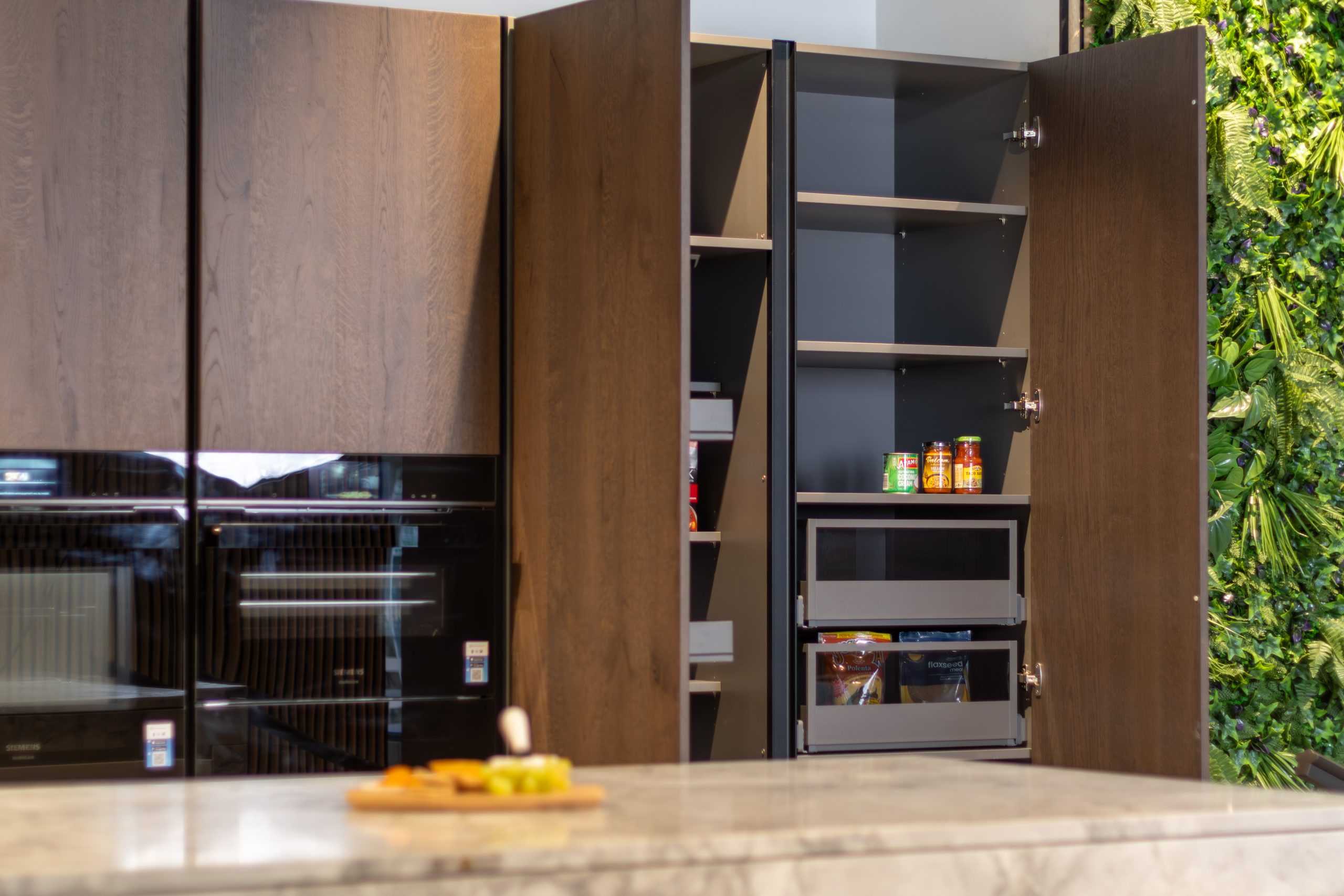
Pull-out pantries fit narrow spaces between appliances, typically measuring 300-450mm wide. These floor-to-ceiling solutions provide easy access to items at the back. They’re ideal for spices, cans, and dry goods, making them an excellent space-saving alternative to walk-in pantries.
Corner Pantry
Corner pantries make use of awkward kitchen corners. Lazy Susan and carousel options allow easy access, while L-shaped shelving configurations maximise available space. This works well in L-shaped kitchen layouts.
Pantry Location and Layout Planning
Where to Position Your Pantry
Position your pantry near the main work zone and close to food preparation areas. If possible, consider access from both the kitchen and the garage. Avoid high-traffic pathways where doors might obstruct movement.
Determining the Right Size
Assess your storage needs before committing to a pantry size. Consider family size, bulk buying habits, and entertaining frequency. Balance your ideal pantry size with available kitchen space. Sometimes a smaller, well-organised pantry works better than a large, poorly planned one.
Pantry Shelving and Storage Solutions
Shelving Types and Materials
Shelving choices impact pantry functionality. Adjustable wire shelving offers flexibility, while solid timber or laminate shelves provide a premium look. Deep shelves (450-500mm) work for bulk items but make it easy to lose things. Shallow shelves (250-300mm) keep everything visible.
Storage Organisation Ideas
Smart organisation turns a basic pantry into a highly functional space:
- Pull-out drawers and baskets for easy access
- Tiered shelving for cans and jars
- Door-mounted racks for spices
- Clear containers and labels for dry goods
- Dedicated zones for different food types
Specialty Storage Features
Modern pantry storage solutions go beyond basic shelves. Appliance garages keep small appliances accessible but hidden. Wine storage can include racks or temperature-controlled sections. Vertical tray dividers organise baking sheets, while spice racks and drawer inserts keep smaller items sorted.
Pantry Door Styles and Options
Hinged Doors
Traditional single or double-hinged doors remain the most common pantry door choice. Ensure you have adequate space for the door swing. Choose between solid doors for a clean look or glass panel options that let you see inside.
Sliding and Pocket Doors
Sliding doors offer space-saving benefits when you don’t have room for a door swing. Barn door styles suit modern kitchens, while cavity sliders provide a seamless look by disappearing into the wall. Consider track quality and hardware durability for daily use.
Open Pantries
Sometimes skipping the door entirely makes sense, particularly when the pantry integrates with kitchen cabinetry. This works best when you maintain impeccable organisation, as everything stays visible.
Pantry Lighting Design
Essential Lighting Elements
Good lighting is crucial in walk-in pantry design. Automatic sensor lights provide convenience, LED strip lighting on shelves illuminates each level, while recessed ceiling lights offer overall illumination. Butler’s pantries need task lighting over benchtop areas.
Natural Light Considerations
Adding windows where possible brings natural light into walk-in pantries. Glass doors can borrow light from the kitchen. Balance natural light with temperature control, as too much sun can affect stored food.
Pantry Design Ideas by Style
Modern Pantry Design
Modern pantries feature handleless doors, clean lines, matte finishes in neutral colours, and minimalist organisation systems.
Traditional and Classic
Traditional designs use timber shelving with glass-front doors, decorative hardware, and warm colour palettes that complement classic kitchen styles.
Farmhouse and Country
Farmhouse pantries often incorporate open shelving with baskets, natural timber materials, vintage-inspired hardware, and rustic finishes.
Pantry Benchtop and Work Surfaces
When to Include a Benchtop
Butler’s pantries benefit from prep areas with benchtops. Walk-in pantries can include benchtop space for housing small appliances or creating coffee stations. Choose durable, easy-clean materials suited to pantries.
Appliance Storage and Power Points
Designate spots for kettles, toasters, and mixers. Install sufficient power points and ensure adequate ventilation for heat-generating appliances. Consider retractable doors for appliance garages.
Colour Schemes and Finishes for Pantries
Light vs Dark Pantries
White and light colours work well for smaller spaces, making them feel larger. Dark schemes can look stunning in larger walk-ins. Decide whether to match your main kitchen or create contrast.
Benchtop and Flooring Choices
Extend your kitchen flooring into the pantry for continuity. Choose practical, easy-clean surfaces that withstand spills and heavy foot traffic.
Common Pantry Design Mistakes to Avoid
Insufficient shelf depth causes problems. Too deep hides items, while too shallow limits storage. Poor lighting makes finding items difficult. Failing to include adjustable shelving removes flexibility as needs change.
Don’t ignore door swing space requirements. Inadequate ventilation can lead to stale odours, while not planning for future storage means you might outgrow your pantry. Avoid cluttered designs without clear zones for different food types.
Budget Considerations for Pantry Design
Custom-built-in systems offer a perfect fit but cost more than modular systems. DIY shelving can work well for walk-in pantries, keeping costs down. Invest in quality hardware and lighting, as these affect daily functionality. Pull-out pantries offer cost-effective alternatives to full walk-ins. Adding pantries during renovation is more economical than retrofitting.
Conclusion
A well-planned pantry kitchen design improves functionality and organisation throughout your kitchen. Choose the right pantry type and size for your space and storage needs. Good design combines accessibility with adequate storage capacity. For complex layouts or major renovations, consider working with a kitchen designer who can help optimise your storage solution.