Kitchen Style Ideas to Suit Your Home
Choosing the right kitchen style sets the tone for your entire home. Whether you’re drawn to sleek modern lines, relaxed coastal vibes, or timeless traditional details, the style you select shapes how your kitchen looks and functions. Australian homes embrace a diverse range of kitchen aesthetics, from compact urban designs to spacious entertainer’s kitchens that flow into outdoor areas.
Your kitchen style isn’t just about following trends. It’s about creating a space that suits your cooking habits, storage needs, and the way you live. Some styles prioritise clean minimalism and integrated appliances, while others celebrate character details and open displays. The key is finding an approach that feels right for your home and budget, then adding the finishes and features that bring it to life.
Modern Kitchen Style
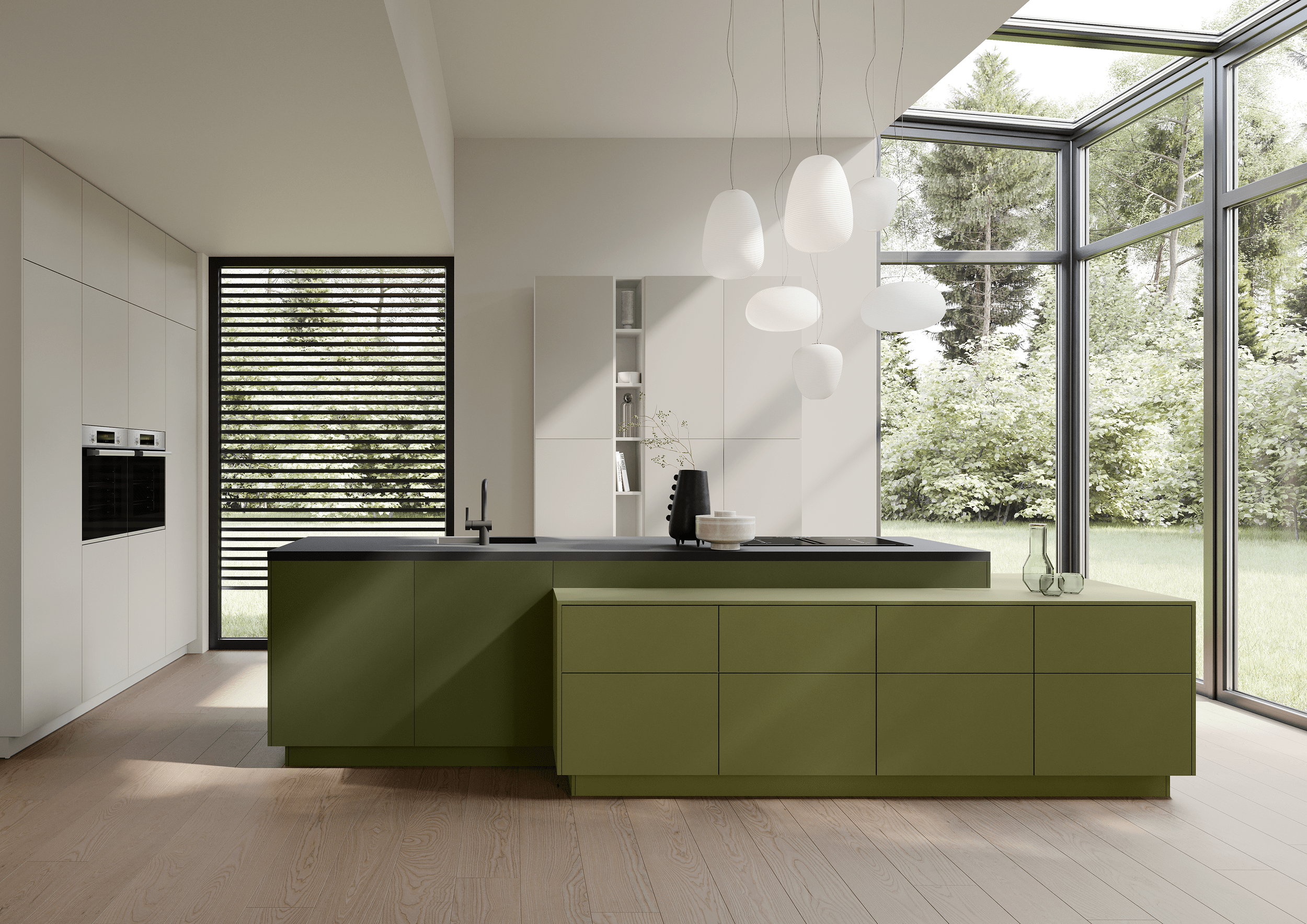
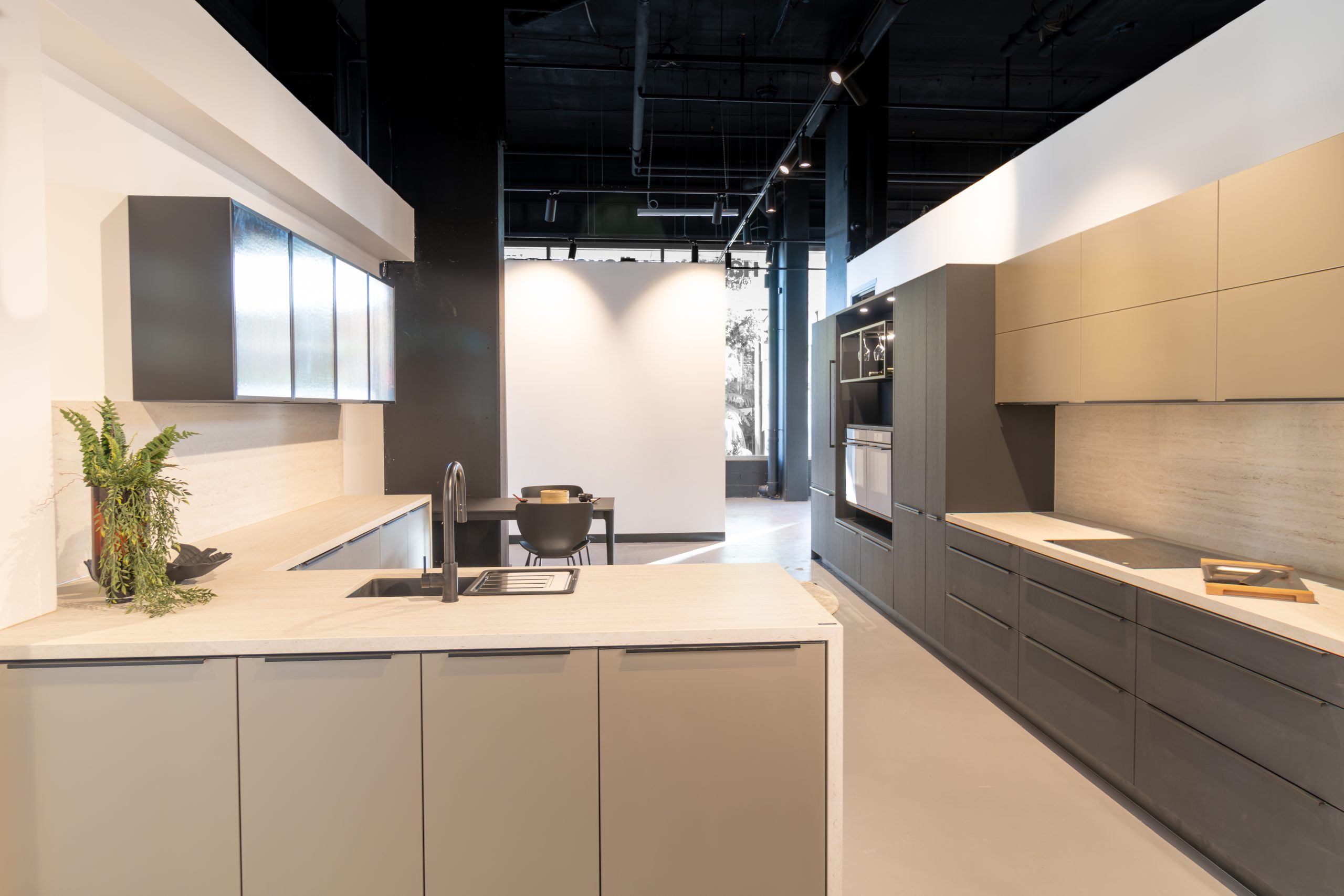
Modern kitchens strip away unnecessary ornamentation in favour of clean geometry and streamlined function. This style works particularly well in open-plan homes where the kitchen needs to feel cohesive with living spaces.
What defines a modern kitchen?
The modern aesthetic relies on simplicity and precision. Key features include:
- Flat-front cabinetry with simple, uninterrupted lines and no decorative mouldings
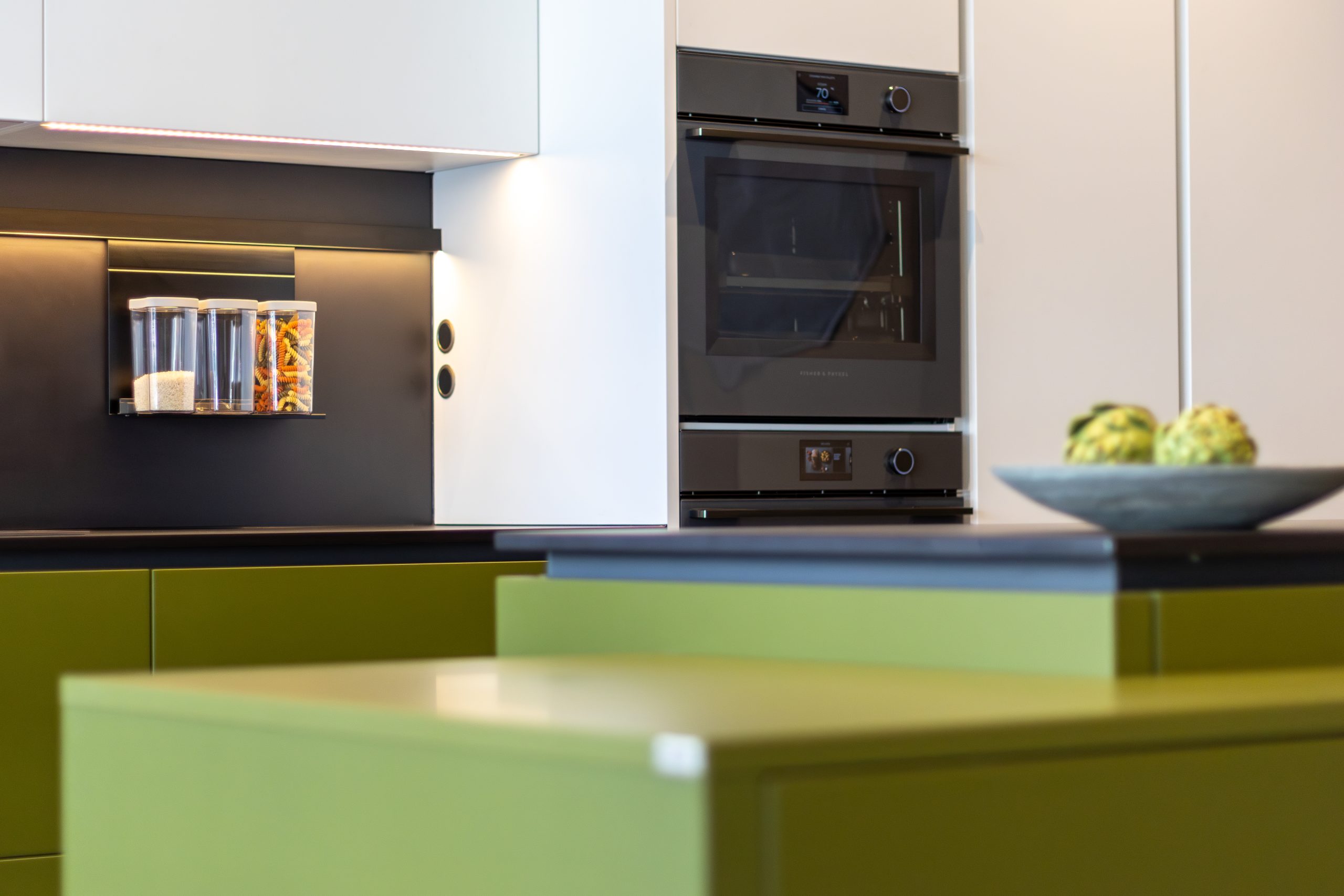
- Integrated appliances that sit flush with cabinetry for smooth sightlines
- Handleless systems using push-to-open mechanisms or sleek metal profiles
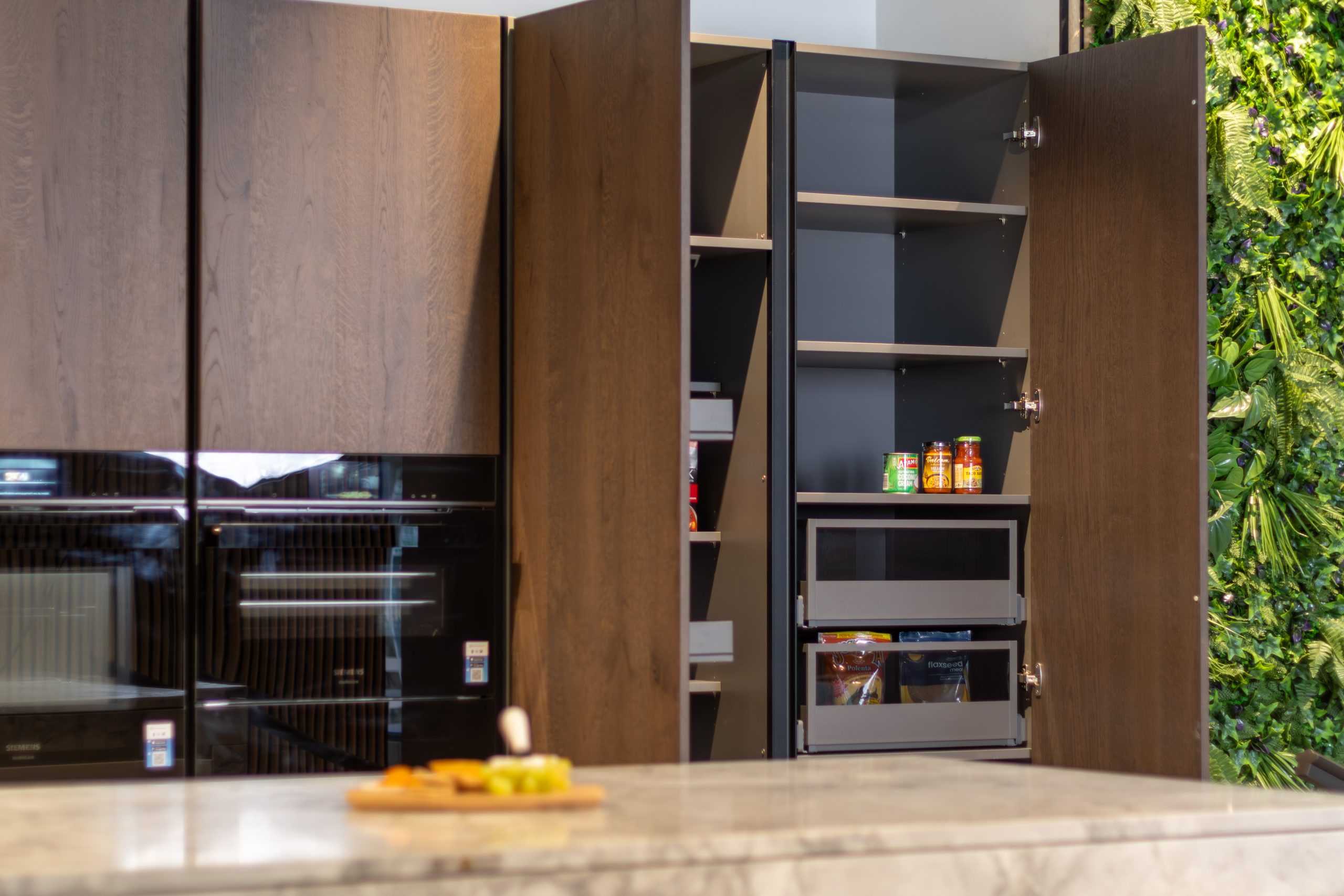
- Hidden storage that keeps benchtops clear and clutter out of sight
The overall effect feels calm and unbusy, perfect for households that prefer clean surfaces and organised spaces.
Best materials for modern kitchens
Material choices reinforce the sleek, contemporary feel:
Cabinetry: Matte or soft-sheen finishes in whites, greys, blacks or deep earthy tones work best. Polyurethane and laminate both deliver the smooth surfaces modern style demands.
Benchtops: Stone or porcelain with minimal pattern variation. Consider honed marble, concrete-look engineered stone, or large-format porcelain slabs that reduce grout lines.
Splashbacks: Glass panels, large-format tiles in subtle colours, or benchtop material extended up the wall. Avoid busy patterns or small mosaics that create visual clutter.
Small Kitchen Style
Small kitchens demand smart decisions about what to include and what to leave out. The right style choices make these spaces feel open and functional rather than cramped.
Making small spaces feel larger
Visual tricks create the illusion of more space:
- Light, cohesive colours across walls, cabinetry and benchtops create visual flow
- Reflective surfaces like glossy splashbacks or polished benchtops bounce light around
- Full-height cabinetry extending to the ceiling maximises storage without using floor space
- Integrated rangehoods keep sightlines clean rather than bulky external units
Smart choices for compact kitchens
Appliances: Choose slimline options designed for tight spaces. A 600mm dishwasher, narrow fridge and compact cooktop still handle daily cooking while leaving room for storage and prep areas.
Storage solutions: Integrated waste bins, multi-use benches that double as dining surfaces, and vertical organisation make every centimetre count.
Hardware: Recessed pulls or handleless systems prevent bulky hardware projecting into the room. These details add up to create a kitchen that feels more spacious than its actual dimensions.
Hamptons Kitchen Style
Hamptons style brings together coastal ease and classic detailing in a way that suits Australian indoor-outdoor living. Originally inspired by the Long Island beach retreats of New York, this aesthetic has been enthusiastically adopted across Australian homes.
Signature Hamptons features
These elements define the kitchen Hampton style:
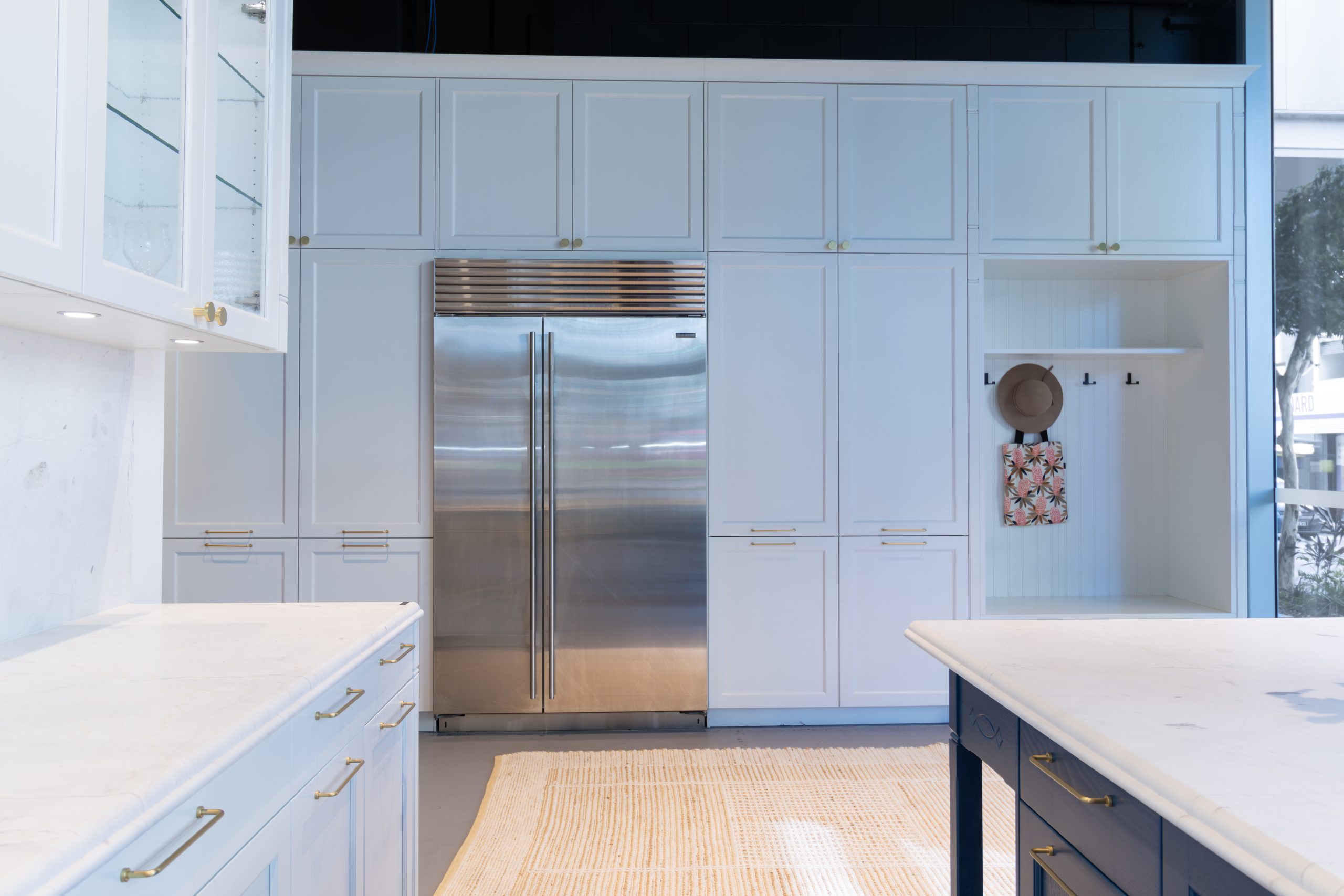
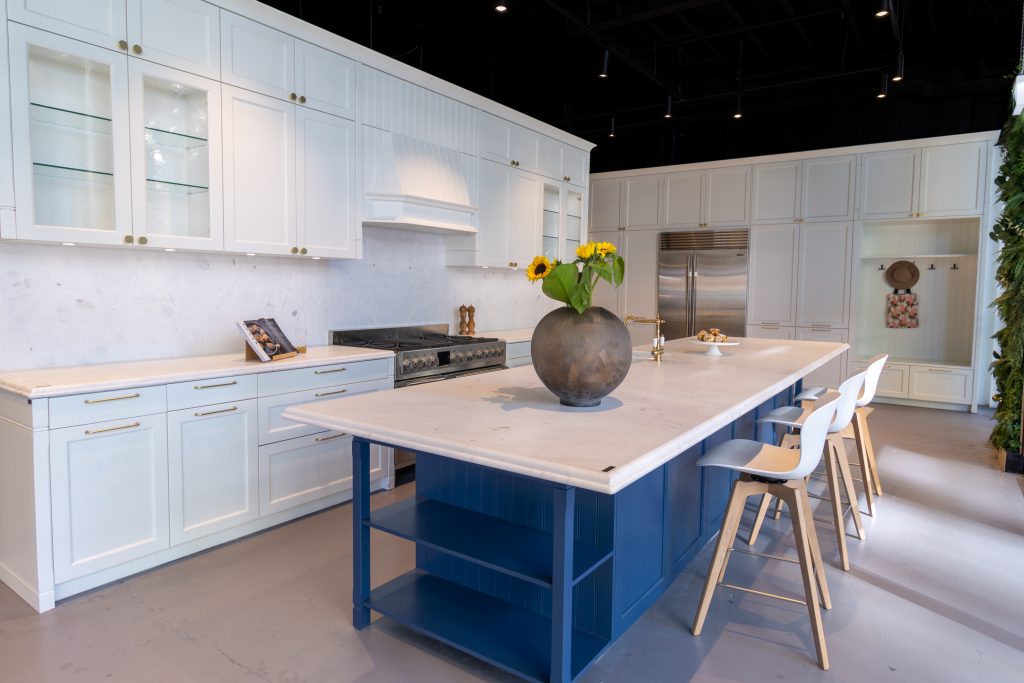
- Shaker doors with recessed centre panels creating a frame-within-a-frame look
- Soft colour palette of whites, coastal blues and gentle greys
- Panelled details on island ends and cabinetry kick panels
- Traditional hardware including cup pulls, knobs in antique brass or brushed nickel
- Butler’s sinks and statement pendant lights over islands
Open shelves might replace some upper cabinets, displaying ceramics or glassware for that relaxed yet refined character.
Adapting Hamptons for Australian homes
Australian interpretations balance the classic aesthetic with practical needs:
Materials: Pair white cabinetry with light timber flooring in pale oak tones. Natural stone benchtops handle our climate better than delicate surfaces. Marble remains popular, though engineered alternatives offer better stain resistance for family use.
Functionality: While American Hamptons kitchens can be decorative showpieces, Australian versions need to handle outdoor entertaining, casual family meals and coastal living. This means durable finishes, proper ventilation for summer cooking, and storage for beach gear and outdoor dining essentials.
Shaker Kitchen Style
Shaker cabinetry has become one of the most versatile foundation styles, working in both classic and contemporary homes. The simple framed door design adapts to various aesthetics depending on colour and styling choices.
Why Shaker works everywhere
The restrained frame-and-panel construction provides visual interest without being overly decorative. It’s simple enough to read as modern in a pared-back palette, yet has enough detail to anchor traditional schemes.
You can dress Shaker up with marble benchtops, statement lighting and high-end appliances for a sophisticated look. Or keep it pared-back with matte finishes, minimal hardware and integrated appliances for a contemporary feel. This adaptability explains why Shaker remains the most requested door profile in Australian kitchen renovations.
Colour and hardware options
Bold colours: Deep greens, navy or charcoal bring drama, especially paired with light benchtops. These rich tones work beautifully in homes with good natural light.
Soft neutrals: Warm whites, gentle greys and stone tones create calmer schemes that feel fresh and timeless.
Hardware impact: Your choice significantly changes the overall feel:
- Traditional cup pulls and round knobs in antique brass = classic territory
- Sleek bar handles in brushed nickel or matte black = contemporary edge
- Push-to-open systems with no handles = truly modern interpretation
Galley Kitchen Style
Galley layouts place two parallel runs of cabinetry facing each other with a central aisle. This efficient configuration suits narrow spaces and creates an ergonomic working zone.
Layout essentials
Success comes from smart planning:
- Clear aisles: Maintain at least 1200mm between the two runs for comfortable movement
- Logical placement: Position fridge, cooktop and sink to minimise steps during meal prep
- Strong task lighting: Essential as galley kitchens often lack natural light in their centre
If space allows, add an island or peninsula at one end to soften the corridor feeling and provide casual seating.
Styling a galley layout
Visual continuity: Use the same cabinetry colour, benchtop material and splashback treatment on both walls. This creates flow and makes the space feel larger than mixing different finishes.
Breaking up solid runs: Open shelves or glass-front cabinets provide visual relief along long cabinetry runs. Light-reflecting finishes like glossy splashbacks and polished benchtops help bounce available light through the space.
Keep it clear: The walking corridor needs to remain functional, so avoid cluttering floor areas with rugs or movable furniture.
Open Kitchen Style
Open-plan kitchens flow into living and dining areas rather than sitting behind walls. This configuration suits Australian entertaining and family life but requires careful planning.
Creating zones without walls
An island or peninsula naturally defines the kitchen zone without blocking sightlines or conversation flow. This central piece provides working space on the kitchen side while offering seating on the living room side.
Visual harmony: Keep colour, flooring and materials consistent across the entire open space. The kitchen cabinetry should pick up colours from nearby joinery or furnishings, and flooring typically continues throughout rather than changing at boundaries.
Managing practical challenges
Ventilation: A quality rangehood that vents externally is critical. Cooking smells and steam can’t be contained behind walls, so proper extraction protects furnishings and prevents odours settling throughout living areas.
Sound control: Soft furnishings like rugs, curtains and upholstered seating absorb noise that bounces around hard kitchen surfaces.
Visual tidiness: Concealed storage becomes more important when your kitchen is always on display. Deep drawers, pull-out pantries and closed cabinetry hide working mess. Consider a butler’s pantry or scullery if budget allows, providing back-of-house space for prep while keeping the main kitchen presentable.
Outdoor Kitchen Style
Taking cooking outside extends your entertaining space and suits Australian climate. Outdoor kitchens range from simple built-in barbecues to fully equipped cooking zones.
Essential elements
Start with these core components:
- Built-in BBQ or grill: Typically fuelled by natural gas or bottled LPG
- Weather-resistant benchtops: Stone, concrete or tile withstand sun, rain and heat
- Outdoor storage: Purpose-built cabinets protect utensils and equipment
- Plumbing access: A sink dramatically improves functionality
- Power points: Support fridges, lighting and small appliances
- Shade structures: Pergolas or louvres make the space usable more of the day
Consider wind patterns and prevailing weather when positioning your outdoor kitchen to maximise seasonal use.
Styling outdoor spaces
Material choices: Match your home’s architecture and indoor kitchen finishes. If you’ve used stone benchtops inside, extend similar stone outside. Cabinetry needs marine-grade or outdoor-rated materials like powder-coated aluminium, stainless steel or sealed timber.
Appliances: Only use outdoor-rated appliances built to withstand exposure. Indoor units will deteriorate quickly outside.
Lighting: Weatherproof fixtures extend functionality into evening hours. Provide both task lighting for cooking and softer lighting for dining.
Cottage Kitchen and Vintage Kitchen
These related styles celebrate warmth, individuality and collected-over-time character rather than coordinated perfection. They suit older homes, rural properties, or anyone drawn to a more relaxed aesthetic.
Character kitchen features
Key elements that create this look:
- Freestanding furniture pieces replacing some built-in cabinetry for a flexible, informal feel
- Open shelves and display rails showcasing ceramics, glassware and everyday items
- Farmhouse sinks in ceramic or fireclay with deep bowls and apron fronts
- Patterned tiles on splashbacks, floors or feature areas
- Warm timber benchtops in butcher block or reclaimed wood
- Mixed hardware combining periods and finishes for eclectic appeal
Balancing old and new
Successful character kitchens retain original details while updating for modern function. You might keep heritage windows or timber floors but add efficient cabinetry and contemporary appliances.
Modern conveniences: Integrate dishwashers, range ovens and refrigeration behind cabinetry doors or in colours that blend with the vintage palette.
Lighting updates: Replace inadequate fixtures with pendants, under-cabinet strips and feature lights that highlight character details.
The goal is comfortable, functional cooking in a space that feels personal and unhurried rather than showroom-perfect.
Minimalist Kitchen and Simple Kitchen Design
These related approaches prioritise calm, clarity and edited simplicity. Minimalist kitchens take a philosophical stance on reduction, while simple kitchen design focuses on straightforward practicality.
The minimalist approach
Visual calm through reduction:
- Handleless fronts create uninterrupted cabinet surfaces using push-to-open mechanisms
- Hidden storage conceals appliances, bins and everyday clutter behind closed doors
- Restrained colour palette typically using one or two tones
- Clear benchtops through disciplined organisation and smart internal systems
Minimalist doesn’t mean non-functional. It requires excellent internal planning so working items are accessible but invisible when stored.
Simple, practical design
This approach suits first homes, rental properties, or anyone who values function over form:
Straightforward layouts: Tried-and-tested configurations without complicated angles or unusual shapes keep costs manageable.
Standard cabinetry: Stock sizes and modules provide plenty of storage without custom pricing.
Robust finishes: Laminate cabinetry and engineered stone benchtops handle family use without requiring precious care.
Easy upgrades: Refresh the kitchen over time with new lighting, fresh paint and updated hardware without major renovation.
Contemporary Kitchen
Contemporary style reflects current design trends and often blends elements from multiple aesthetics. Unlike modern kitchens with strict minimalist principles, contemporary kitchens evolve as preferences shift.
Current contemporary trends
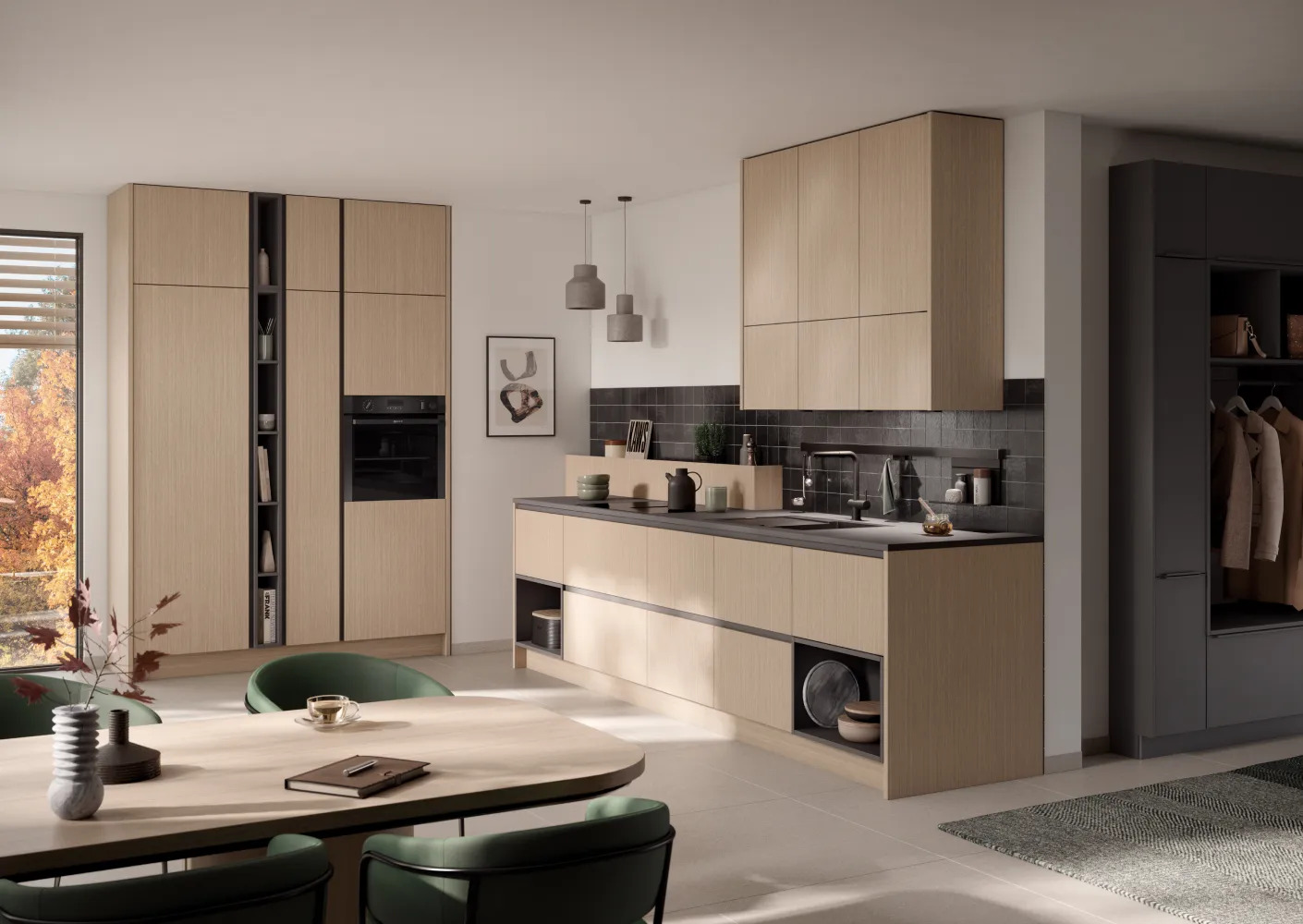
Colour palette: Warmer neutrals like sandy tones, soft greys and earthy browns dominate. Natural textures feature prominently through timber grain, stone patterns and tactile surfaces.
Mixed materials: Create contrast by combining:
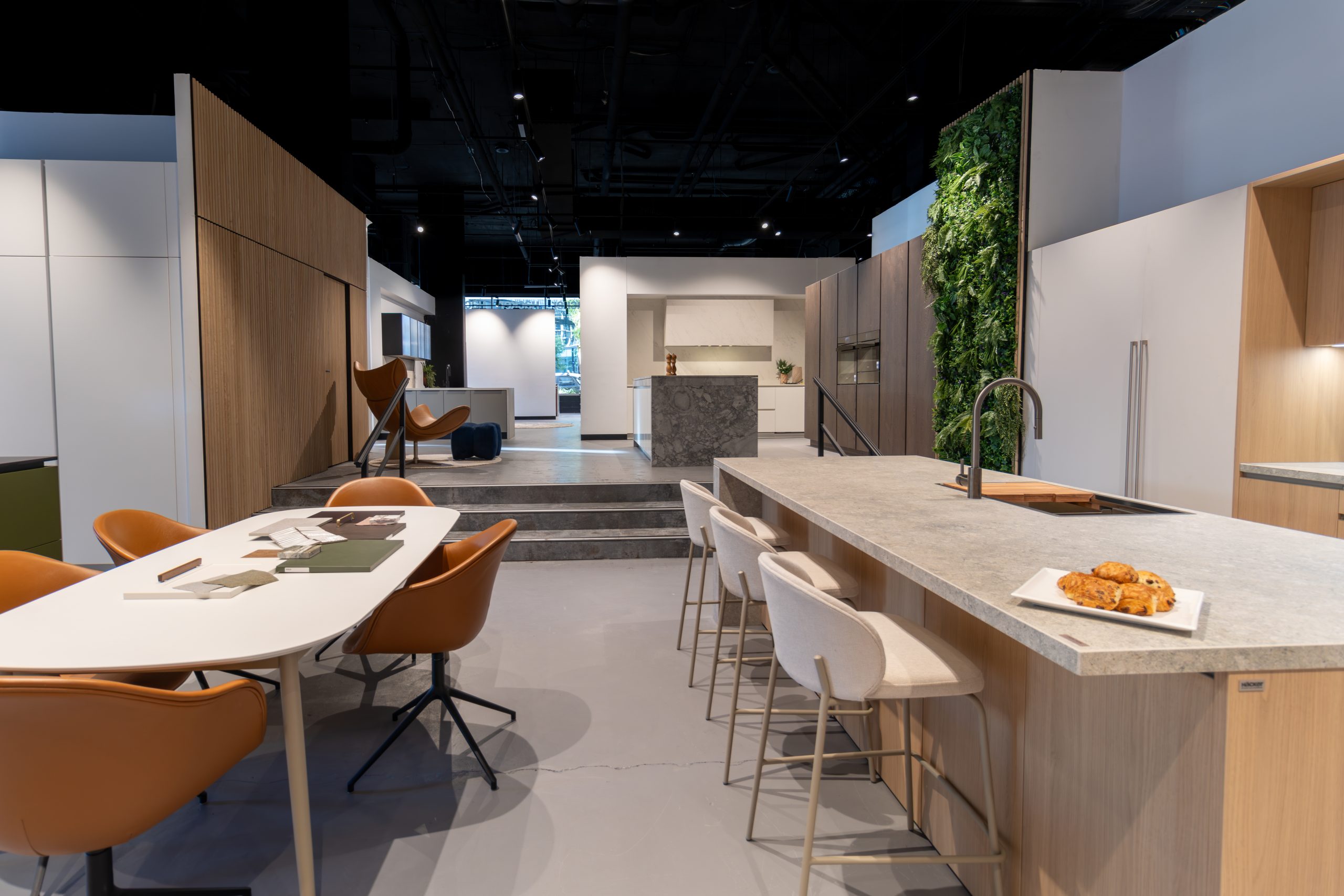
- Smooth stone benchtops with timber-look cabinetry
- Matte black hardware against light finishes
- Textured splashbacks with sleek appliances
Smart integration: Contemporary kitchens embrace technology through smart appliances, induction cooktops and hidden charging stations.
Sustainable choices: Energy-efficient appliances, locally sourced materials and low-VOC finishes reflect growing environmental awareness.
Balanced storage: Open shelving displays curated items while closed cabinetry maintains plenty of concealed storage. Islands anchor the space, often with waterfall edges or contrasting finishes.
Luxury Modern Kitchen Designs
Luxury modern kitchens elevate minimalist principles with premium materials, cutting-edge appliances and bespoke details. These spaces showcase quality and craftsmanship while maintaining clean contemporary lines.
Premium features
Statement stone: Book-matched marble or exotic granite creates dramatic centrepieces. Natural veining continues up splashbacks and across island waterfall edges for maximum impact.
Premium cabinetry systems: Features include:
- Soft-close mechanisms on every door and drawer
- Touch-to-open systems for seamless surfaces
- Internal organisation configured for specific needs
- Integrated LED lighting highlighting materials
Top-tier appliances: European manufacturers offer professional cooking capability within integrated cabinetry. Wine fridges, steam ovens, teppanyaki plates and built-in coffee systems cater to serious home cooks.
Refined details: Hardware might disappear entirely through push systems or appear as minimalist details in brushed metals or leather-wrapped handles.
The overall impression is understated sophistication. Nothing feels showy or excessive, yet every element represents considered quality.
How to Choose the Right Kitchen Style for Your Home
Narrowing down kitchen styles from endless possibilities requires a clear process. Focus on styles that work with your home’s architecture, lifestyle needs and realistic budget.
Matching styles to your home’s architecture
Consider your home’s existing character. A 1970s brick veneer with low ceilings suits different styles than a contemporary build with high ceilings and expansive windows.
Heritage homes: Cottage, Shaker or Hamptons styles often respect original architecture better than ultra-modern designs.
Modern builds: Give you flexibility with contemporary, minimalist or luxury modern approaches.
Transition zones: Look at how your kitchen connects to adjacent rooms. If your living areas feature modern furniture and clean lines, a heavily ornate cottage kitchen might feel jarring. The kitchen should feel like part of the same home.
Location considerations: Hamptons and coastal styles naturally suit beach suburbs. Urban apartments often favour space-maximising modern or minimalist approaches. Regional properties might embrace cottage aesthetics that connect with rural surroundings.
Testing samples and creating moodboards
Collect physical samples rather than relying on screen images:
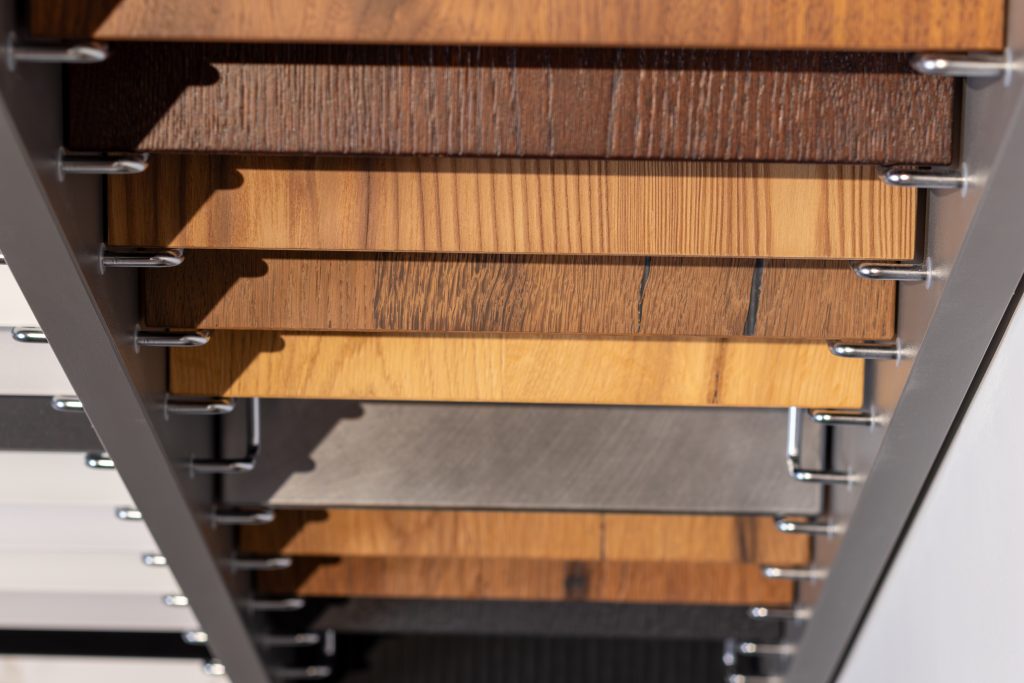
Cabinet samples: Show actual colour, sheen level and grain pattern under your home’s lighting. View samples in your kitchen space at various times of day, as natural and artificial light affect colours differently.
Benchtop offcuts: Reveal real stone or engineered surface variation. Online photos rarely capture true depth, veining or speckle patterns. Place benchtop samples next to cabinet samples to assess combinations before committing.
Physical moodboards: Pin all your selections together including cabinet colour, benchtop material, splashback, hardware finishes and flooring. This tangible reference helps spot elements that don’t belong or combinations needing adjustment.
Why physical matters: Screen colours vary dramatically between devices, and materials with texture or sheen can’t be accurately judged from flat images. The extra effort prevents expensive mistakes.
Mixing styles or staying consistent
Single style benefits: Creates coherence and simplifies decision-making. When every choice aligns with your chosen aesthetic, the kitchen feels intentionally designed. This suits people who prefer clear guidelines and worry about mismatched selections.
When mixing works: Requires confident editing and a strong unifying element. You might combine modern cabinetry with vintage pendant lights, or Shaker doors in contemporary colours with minimalist hardware. The key is having one dominant style with carefully selected contrasts, not an equal blend.
Compatible combinations: Some styles naturally complement each other:
- Contemporary and modern share similar principles
- Hamptons and Shaker both feature frame-and-panel doors
- Cottage and vintage embrace similar relaxed aesthetics
Consider your confidence: If working with an experienced kitchen designer, they can guide successful style mixing. If managing the project yourself with limited design experience, sticking to one clear style reduces risk.
Bringing Your Kitchen Style to Life
Selecting a kitchen style gives you a framework, but personalising it makes the space truly yours.
Prioritising what matters
Match to your lifestyle: Consider how you actually use your kitchen rather than just how it looks in photos. A family that cooks together needs different storage than a couple who rarely entertains. Someone passionate about baking requires dedicated benchtop space and storage for bulky equipment.
Budget wisely: Prioritise elements that matter most to you:
- If you love cooking → invest in quality appliances and durable benchtops
- If you’re drawn to aesthetics → allocate more to cabinetry finishes and statement features
- Looking to save → standard-height cabinetry costs less than custom sizing, or save on internal fittings and upgrade organisation systems later
Testing before committing
Visit display homes or showrooms to experience different styles in person. Notice which ones feel comfortable rather than just impressive. Test finishes with samples under your actual lighting conditions.
The kitchen style that works best will be the one you still enjoy living with years after installation.