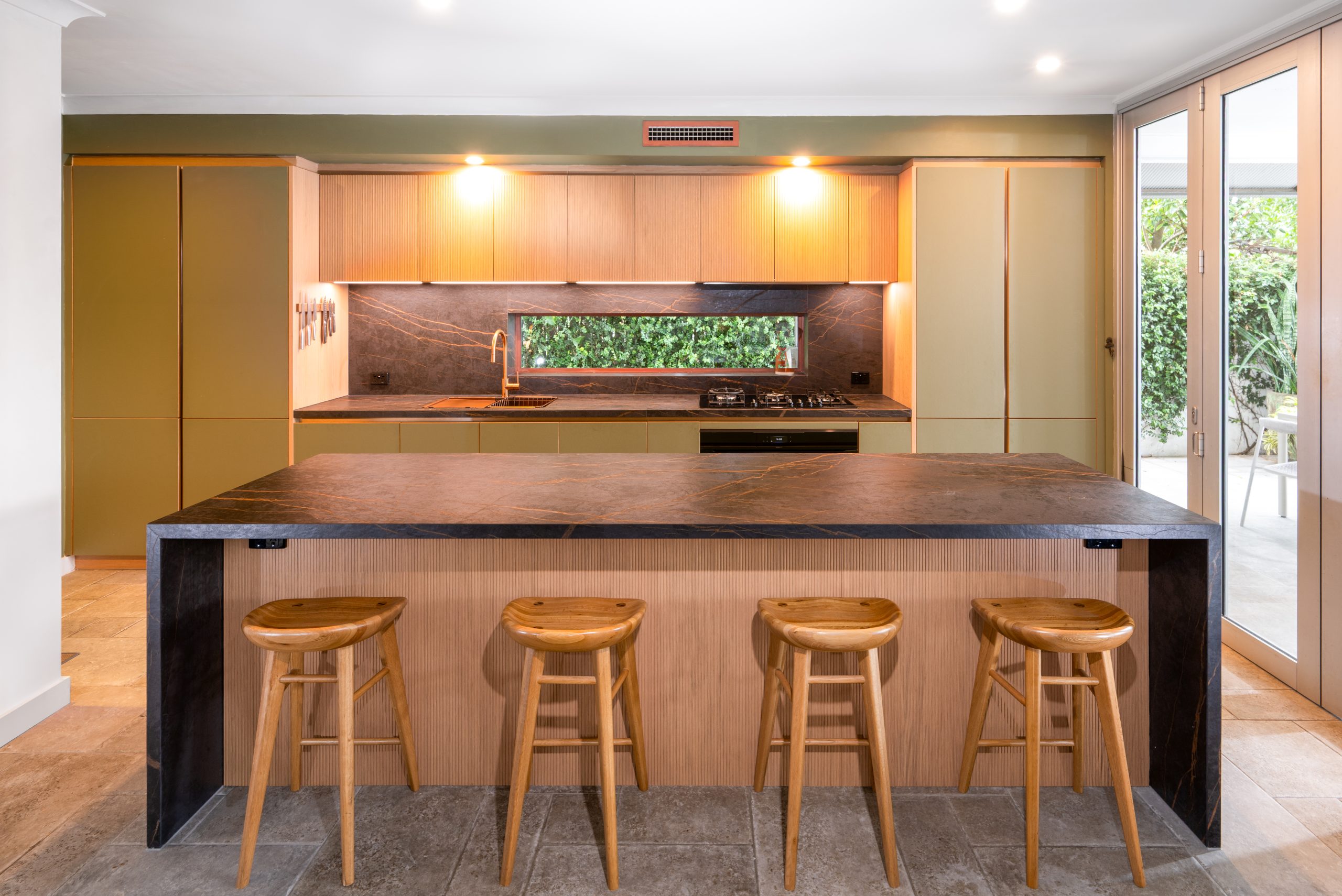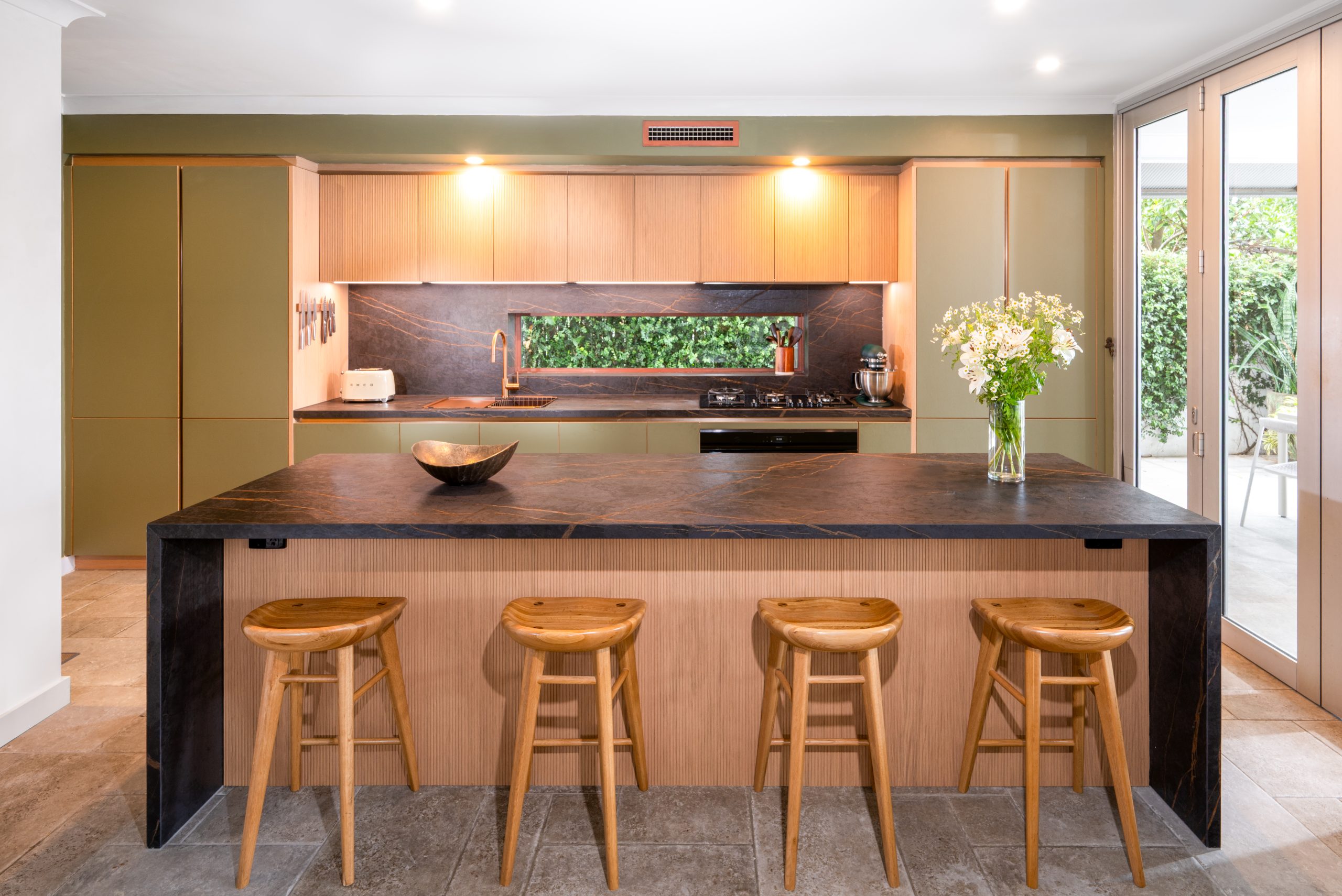
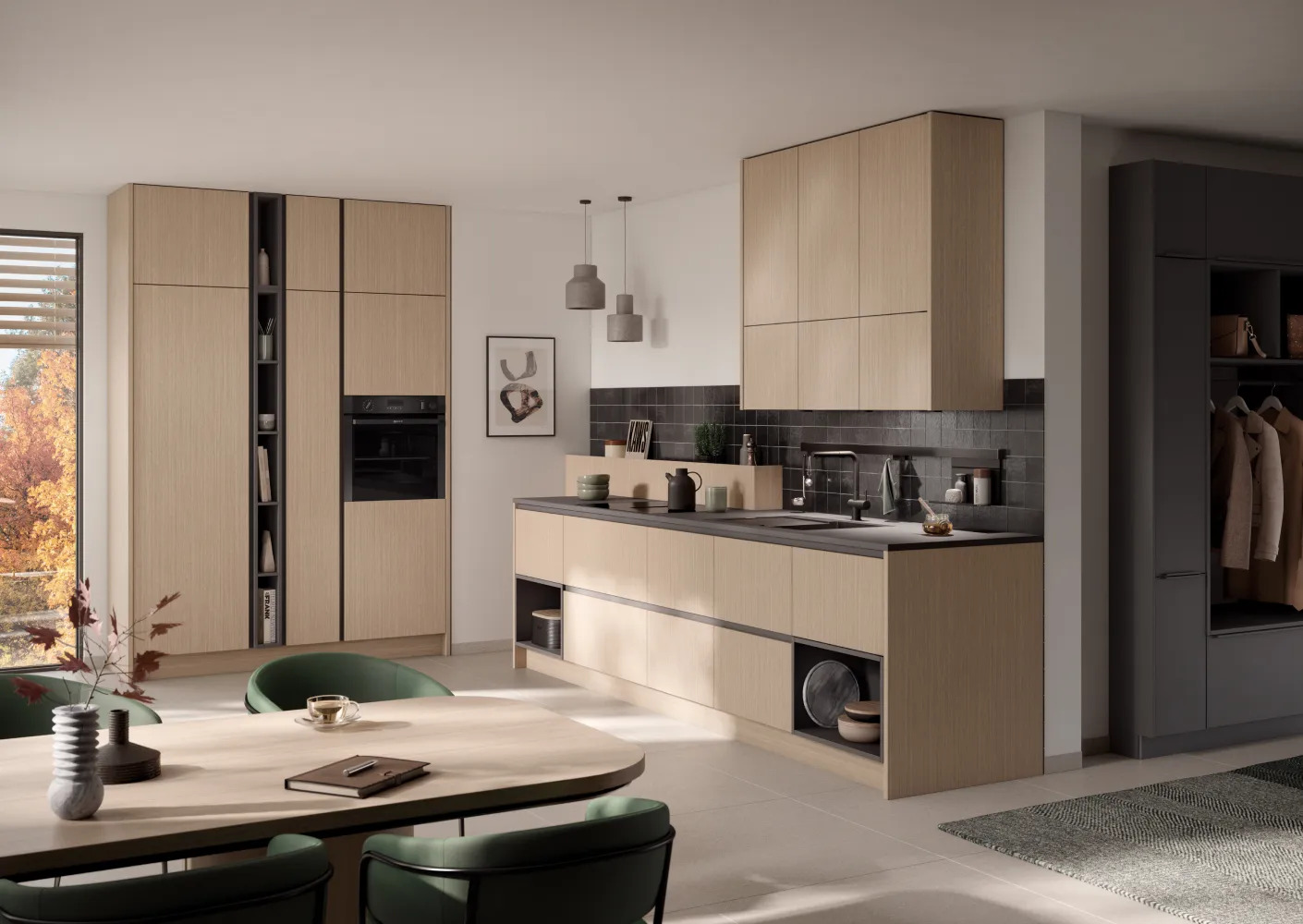
Introduction to I-Shaped Kitchens
An I-shaped kitchen maximises efficiency within a single wall, making it ideal for compact homes, apartments, and open-plan living spaces. This streamlined layout places all kitchen functions along one straight line, creating a space-saving solution that doesn’t compromise on functionality.
Whether you’re working with a small footprint or prefer a minimalist design, the I-shaped kitchen offers practical advantages while maintaining clean aesthetics. Understanding how to optimise this layout helps you create a kitchen that works hard without feeling cramped.
What is an I-Shaped Kitchen?
Single-wall layout explained
An I-shaped kitchen arranges all cabinetry, appliances, and work surfaces along a single wall. Everything from your refrigerator to sink to cooktop sits in one continuous line, typically measuring between 2.4 to 4 metres in length.
This layout works by consolidating kitchen functions into minimal space. Rather than spreading elements across multiple walls like L-shaped or U-shaped configurations, the I-shaped kitchen keeps everything accessible within a few steps.
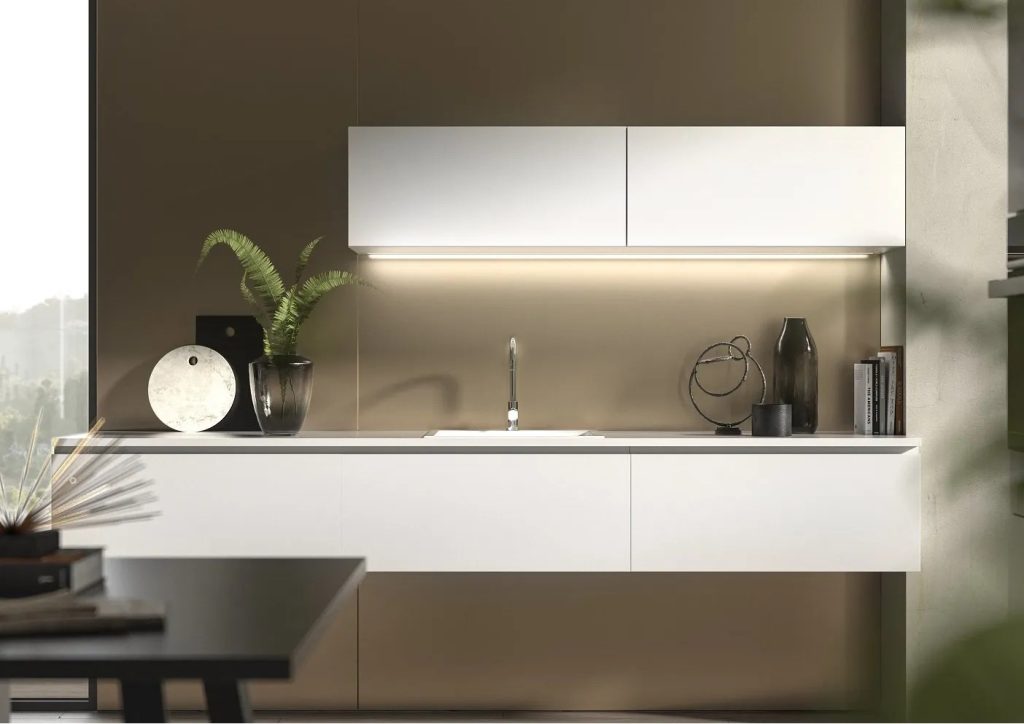
Key design elements
Essential components of an I-shaped kitchen include:
- Base cabinetry: Running the full length of the wall for storage and work surface
- Wall cabinets: Overhead units maximise vertical storage space
- Integrated appliances: Refrigerator, cooktop, oven, and sink arranged along a single wall
- Benchtop: Continuous work surface connecting all zones
Comparison with other layouts
I-shaped vs L-shaped: L-shaped kitchens use two perpendicular walls, offering more benchtop space and better work triangle efficiency. I-shaped kitchens suit tighter spaces where an L-configuration won’t fit.
I-shaped vs U-shaped: U-shaped kitchens surround you with cabinetry on three walls, providing maximum storage but requiring more room. I-shaped layouts work in spaces too small for U configurations.
I-shaped vs galley: Galley kitchens feature two parallel walls facing each other. I-shaped uses just one wall, leaving the opposite side open for dining or living areas in open-plan spaces.
Advantages of I-Shaped Kitchens
Space Optimisation for Small Areas
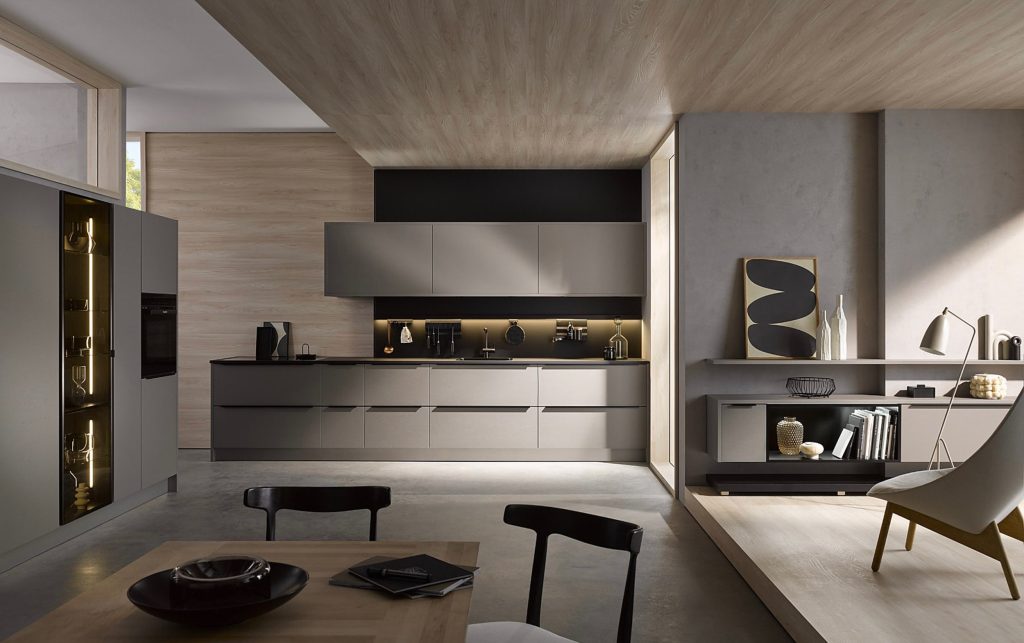
Perfect for compact homes: Studio apartments, small units, and tiny homes benefit enormously from I-shaped kitchens. The layout requires minimal floor space while providing essential cooking facilities. You can fit a functional kitchen into as little as 2.4 metres of wall length.
Maximising linear space: Every centimetre along the wall works hard. Careful planning ensures adequate prep space between appliances, sufficient storage through both base and wall cabinets, and logical positioning of sink, cooktop, and refrigerator. Vertical storage becomes crucial, with overhead cabinets extending to ceiling height, capturing otherwise wasted space.
Cost Efficiency and Easy Installation
Budget-friendly construction: I-shaped kitchens typically cost less than multi-wall layouts. You need:
- Less cabinetry overall (single run vs multiple walls)
- Reduced benchtop material (one continuous length)
- Fewer metres of splashback tiling
- Simpler installation with everything in one location
Simplified services: Plumbing and electrical work concentrates along one wall, reducing installation complexity and cost. Water supply and waste pipes run to a single location. Electrical outlets and lighting circuits follow one path. This simplicity particularly benefits renovations where relocating services across multiple walls becomes expensive.
Versatility in Design Styles
Style compatibility: I-shaped kitchens adapt to various aesthetics from minimalist Scandinavian to warm contemporary. The clean linear form naturally suits modern design but works equally well with traditional cabinetry and classic finishes.
Customisation opportunities:
- Choose cabinetry colours from bold statements to soft neutrals
- Select benchtop materials matching your budget and style
- Mix open shelving with closed cabinets for personalised storage
- Add personality through hardware, lighting, and accessories
Design Principles of I-Shaped Kitchens
Efficient Workflow in a Single Line
Adapting the work triangle: Traditional Häcker Australia relies on the work triangle connecting sink, cooktop, and refrigerator. In I-shaped kitchens, this becomes a work line. Optimal arrangement places the sink centrally with the cooktop on one side and the refrigerator on the other, minimising steps during meal preparation.
Organising functional zones:
- Refrigerator zone: One end with nearby storage for ingredients and dry goods
- Preparation zone: Clear benchtop space, ideally 600-900mm, for chopping and assembly
- Cooking zone: Cooktop with rangehood above and a heat-resistant surface adjacent
- Cleaning zone: Sink with dish drainer space and storage for cleaning supplies
Logical flow moves from food storage through preparation to cooking and finally cleaning, all within easy reach.
Storage and Cabinetry Solutions
Maximising vertical space: With limited wall length, you must build upward. Full-height cabinetry from benchtop to ceiling captures maximum storage. Consider:
- Overhead cabinets with internal organisers
- Open shelving for frequently used items
- Tall pantry units if the wall length allows
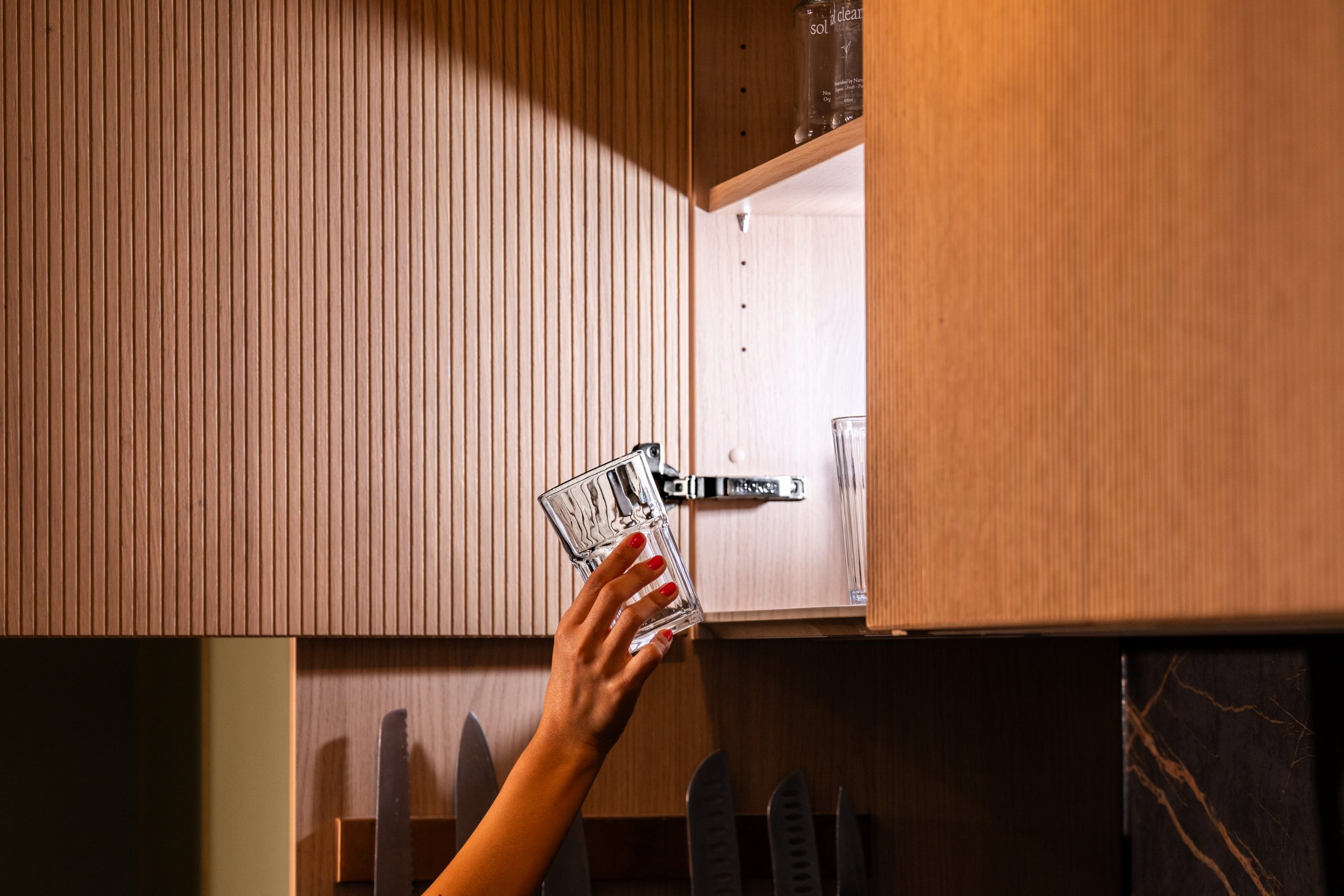
- Hanging rails or magnetic strips for utensils and knives
Innovative compact storage:
- Pull-out drawers instead of cupboards for better access
- Internal drawer dividers maximise organisation
- Corner solutions if your I-shape turns slightly
- Toe-kick drawers utilising space below base cabinets
- Slim pull-out pantries filling narrow gaps
Lighting and Ventilation Strategies
Natural light importance: I-shaped kitchens often sit against exterior walls with windows above the benchtop. This natural illumination brightens the work surface and makes the space feel larger. If your I-shaped kitchen faces an internal wall, compensate with strong artificial lighting.
Ventilation placement:
- Rangehood: Essential above your cooktop for steam and odour extraction
- External venting: Ducting outside works better than recirculating models
- Window proximity: Natural ventilation through nearby windows supplements mechanical extraction
- Adequate extraction rate: Choose rangehoods matching your cooktop size and cooking frequency
Ideal Settings and Space Requirements
Room Dimensions and Layout Considerations
Optimal measurements:
- Minimum wall length: 2.4 metres for basic functionality
- Comfortable length: 3.0-4.0 metres provides adequate work zones
- Benchtop depth: Standard 600mm for base cabinets and appliances
- Clearance space: Minimum 1.2 metres in front for movement and access
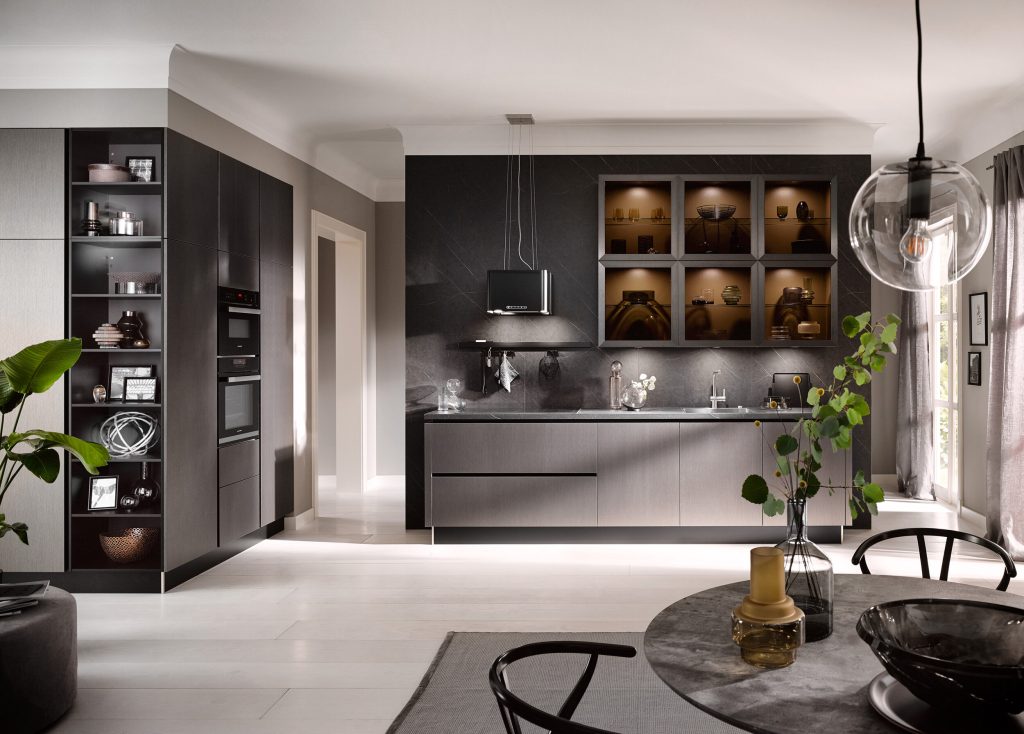
Open-plan integration: I-shaped kitchens excel in open-plan homes where they define the kitchen zone without blocking sightlines. The single wall leaves the opposite area open for dining tables, lounges, or circulation paths. This creates a visual connection between spaces while maintaining functional separation.
Suitable Home Types and Floor Plans
Studio apartments: The I-shaped kitchen perfectly suits studios where space efficiency is critical. It provides full cooking facilities while leaving maximum floor area for living and sleeping zones.
Converted galley kitchens: Removing one wall of a galley kitchen creates an I-shaped layout, opening up space and improving flow. This renovation suits homes where the galley kitchen feels cramped or cuts off circulation.
Open-plan living: Modern open-plan homes use I-shaped kitchens to maintain visual openness. The kitchen sits against one wall while living and dining areas occupy the remaining space without physical barriers.
Adapting to constraints: Narrow rooms, unusual angles, or limited wall availability all favour I-shaped solutions. This flexible layout works where other configurations simply won’t fit.
Styling and Modern Inspiration
Colour Schemes and Materials
Popular finishes:
- Light cabinetry: Whites, soft greys, and pale timber tones make compact kitchens feel larger
- Benchtops: Stone, engineered stone, or laminate in complementary colours
- Splashbacks: Glass, tiles, or stone extending along the full wall length
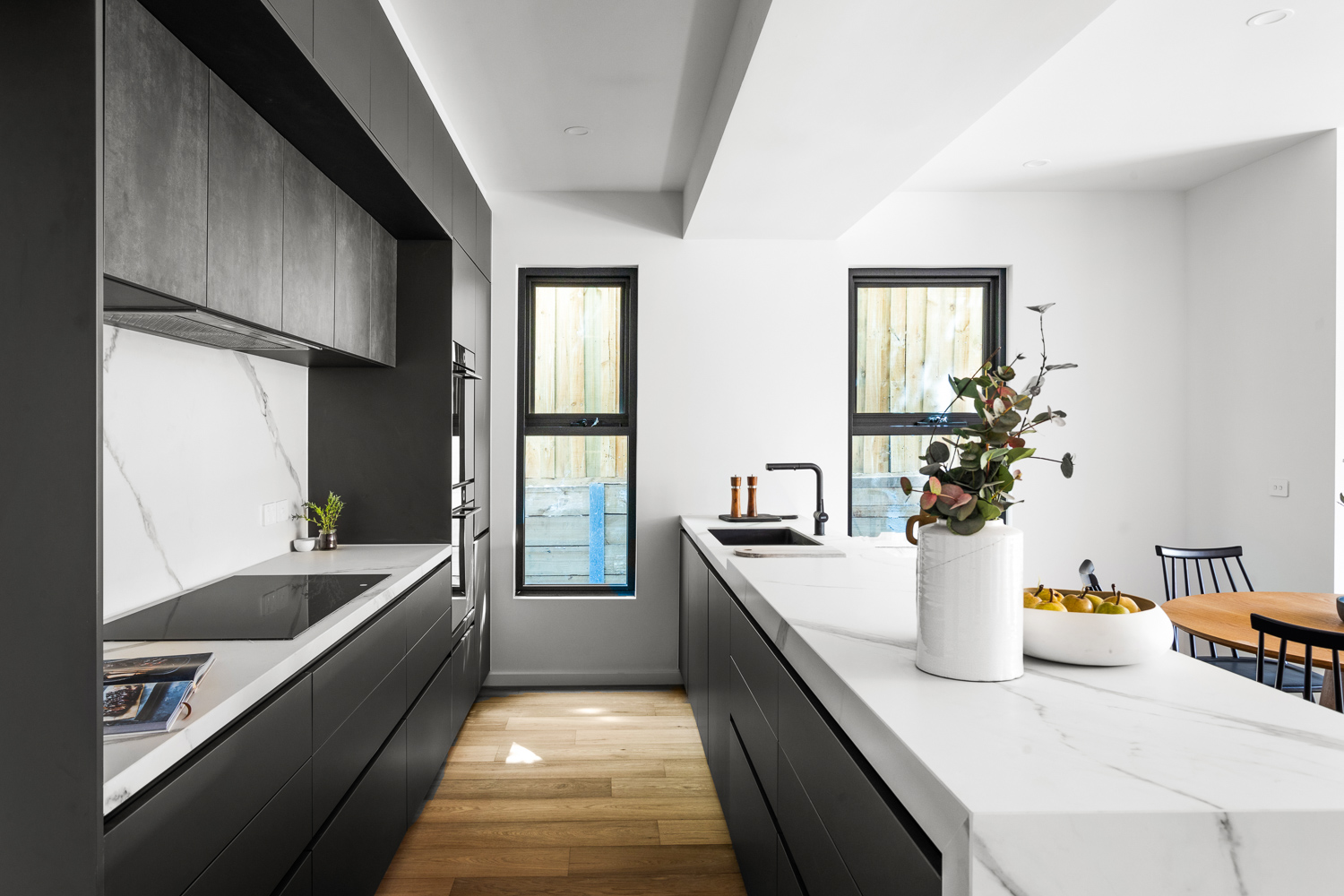
- Contrast options: Dark lower cabinets with light upper units create depth
Enhancing space perception:
- Glossy finishes reflect light and feel more spacious
- Consistent colours create visual continuity
- Large-format tiles reduce grout lines and busy patterns
- Glass cabinet fronts add lightness compared to solid doors
Appliance Choices and Placement
Compact appliances: Choose appropriately sized equipment for I-shaped kitchens:
- Refrigerator: Slimline models (600-700mm wide) save valuable wall length
- Cooktop: 600mm width provides four burners without excessive space
- Oven: Consider compact or combination units if space is tight
- Dishwasher: Slimline 450mm models suit small households
Integrated options: Built-in appliances create seamless aesthetics. Panel-ready refrigerators, under-bench ovens, and flush-mount cooktops maintain clean lines essential to a successful I-shaped design.
Visual harmony: Match appliance finishes throughout. Stainless steel, white, or black creates a cohesive appearance when all appliances coordinate.
Accessorising and Finishing Touches
Lighting fixtures:
- Under-cabinet LED strips: Illuminate work surfaces effectively
- Pendant lights: Add style above any breakfast bar or island extension
- Recessed downlights: Provide general ambient lighting
- Feature lighting: Highlight open shelving or display areas
Décor elements:
- Display favourite items on open shelves sparingly
- Plants add life without consuming precious benchtop space
- Artwork or prints personalise the kitchen wall
- Coordinated canisters, utensil holders, and accessories maintain tidiness
Maintaining practicality: In compact I-shaped kitchens, every item must justify its presence. Beautiful accessories that also serve functional purposes work best. A stylish knife block, attractive utensil jar, or decorative fruit bowl combines aesthetics with everyday use.
Making Your I-Shaped Kitchen Work
Success with an I-shaped kitchen comes from embracing its constraints rather than fighting them. Plan carefully to maximise your limited wall length. Invest in quality cabinetry with smart internal organisation. Choose appropriately scaled appliances. Keep surfaces clear and store items vertically wherever possible.
The I-shaped kitchen proves that effective design isn’t about size, it’s about using available space intelligently. With thoughtful planning and the right design choices, this efficient layout delivers everything you need in a compact, attractive package.