
Kitchen Sink Design Ideas for Australian Kitchens
A kitchen sink design is the combination of bowl configuration, mounting style and benchtop placement that determines how a sink looks and…
Kitchen tapware is the tap, mixer or faucet fitted to your sink, along with its handle, spout and any pull-out or filter function it includes. The terms tap, mixer and faucet are often used interchangeably in Australia, though “mixer tap” is the more common local term for a single-spout fitting that blends hot and cold water. This guide covers the main kitchen tap types, the most requested finishes, what wall-mounted and commercial tapware require, and what kitchen tap replacement typically costs in Australia.
Kitchen tapware is the general term covering any tap fitting at the sink, including its handle, spout, cartridge and finish. A kitchen tap mixer specifically describes a fitting with a single spout and either one or two handles that mix hot and cold water together before it reaches the spout. A kitchen tap faucet is the same fitting under its American English name, used more often in product listings and overseas brands than in everyday Australian conversation. In practice, all three terms point to the same object sitting above your sink.
Kitchen tap types are generally grouped by how the water is mixed, how the spout moves, and where the tap is installed. The main categories used in Australian kitchens are set out below.
A kitchen tap handle can be a single lever that controls both temperature and flow in one motion, or a twin-handle design with separate controls for hot and cold water. A single-lever handle is the more common choice in a modern kitchen, since it allows one-handed adjustment while the other hand holds cookware under the tap. A twin-handle or pillar-style design suits a traditional or provincial kitchen, where the two separate handles echo a period aesthetic.
A pull-out kitchen tap with a spray or shower function lets the spout extend on a flexible hose, with a button or dial on the head that switches between a concentrated stream and a wider, shower-style spray pattern. This function is useful for rinsing vegetables, filling tall pots away from the main sink basin, and cleaning the sink itself. The hose needs clear space in the cabinet below to retract fully, so this is worth confirming with your cabinetry designer if you are fitting a pull-out tap into an existing cabinet run.
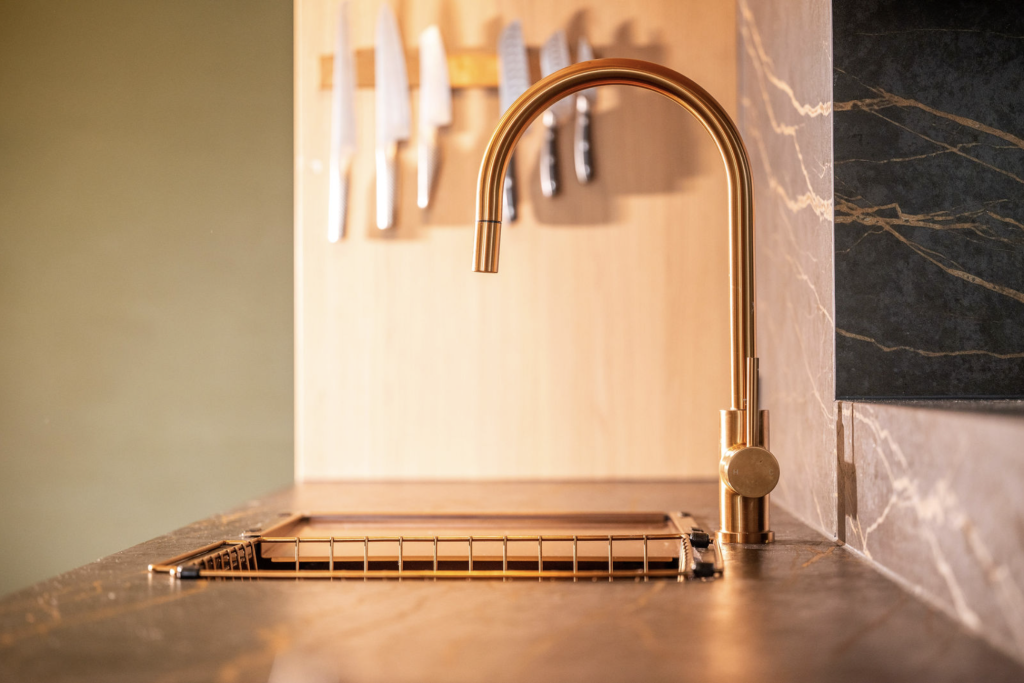
Black, gold and brass kitchen tapware each suit a different kitchen style and come with different maintenance expectations, as set out in the table below.
| Finish | Look | Best paired with | Maintenance note |
| Matte black | Bold, high contrast | Handleless cabinetry, stone or concrete-look benchtops | Shows water spots more than lighter finishes, wipes clean easily |
| Brushed gold | Warm, non-tarnishing | Timber-look cabinetry, warm stone benchtops | Chemically treated finish resists tarnishing |
| Polished or raw brass | Warm, develops a living patina | Traditional or provincial kitchens | Tarnishes and ages over time unless regularly polished |
Wall-mounted kitchen tapware connects through in-wall plumbing rather than through the benchtop or sink deck, which gives a clean, uncluttered look around the sink. This configuration needs the water supply roughed in at the correct wall height during construction or a full renovation, since moving from a bench-mounted to a wall-mounted tap after the benchtop is installed means reworking the wall cavity. Wall-mounted tapware also needs enough spout reach and drop to clear the sink’s rim and still land water inside the bowl.
Commercial kitchen tapware is built to handle significantly higher cycle counts than a residential tap, since a cafe or restaurant tap may be turned on and off hundreds of times a day. This typically means a heavier-duty ceramic disc cartridge, a reinforced pull-out hose, and finishes chosen for resistance to frequent cleaning with commercial-grade detergents. A residential kitchen does not need commercial-grade tapware, but the same durability principles, such as choosing a quality cartridge, apply to any household that uses its kitchen tap heavily.
A kitchen tap leaking from the base is usually caused by a worn O-ring or seal where the tap body meets the benchtop or sink deck, rather than a fault in the cartridge that controls water flow. A leak at the spout itself, by comparison, more often points to a worn cartridge or washer. Tightening the base nut can sometimes resolve a loose fitting, but a persistent leak from the base generally needs the O-ring replaced, which is a straightforward job for a licensed plumber.
Kitchen tap replacement cost in Australia depends on whether the job is a simple cartridge or washer repair or a full tap swap, as set out below.
| Job | Typical cost (AUD) |
| Washer replacement | 80 to 180 |
| Ceramic disc cartridge replacement | 120 to 250 |
| O-ring or seal replacement (base leak) | 80 to 180 |
| Full tap replacement, labour only | 150 to 350 |
| Full tap replacement, supply and install | 250 to 600 |
These figures are general industry ranges and will vary by state, tradesperson and the tap brand chosen, so treat them as a planning guide rather than a quote.
A well-made kitchen tap with a ceramic disc cartridge should last around 10 to 15 years under normal household use, though water quality, hardness and frequency of use all affect this figure. Hard water can accelerate mineral build-up inside the cartridge, while a tap used constantly in a busy household will wear faster than one in a holiday home. Choosing a tap with a solid brass body and a quality cartridge at the outset, rather than the cheapest option available, is the main factor within a buyer’s control.
Choosing kitchen tapware that matches your cabinetry means confirming the tap’s finish against your cabinet hardware and benchtop, and confirming the tap hole position and spout reach against your sink before ordering. A cleaning zone built around a Hacker Australia kitchen is planned with the sink, tap and surrounding cabinetry as one system, so your designer will help confirm tap placement and finish alongside your cabinetry and benchtop selections rather than leaving it as an afterthought. Visit our Melbourne, Brisbane or Perth showroom to see tapware and cabinetry finishes paired in person.
A mixer tap blends hot and cold water through one spout, while a faucet is the same type of fitting under its American English name. In everyday Australian use, tap, mixer and faucet generally refer to the same fitting at the sink.
A pull-out tap extends horizontally across the sink, which suits a wide, shallow sink, while a pull-down tap arcs down from a tall gooseneck spout, which suits a deep bowl. Neither is objectively better, since the right choice depends on the sink’s shape and depth.
A filter tap gives filtered water on demand from the sink without a jug taking up fridge space, but it needs a cartridge replaced roughly every six months and either an extra tap hole or a combined spout. A filter jug has a lower upfront cost but needs to be refilled and stored.
A kitchen tap leaking from the base usually needs the O-ring or seal beneath the tap body replaced, which is a straightforward job for a licensed plumber and does not generally require replacing the whole tap.
Polished or raw brass will tarnish and develop a living patina over time unless it is regularly polished, while brushed gold finishes are chemically treated to resist tarnishing and keep a consistent appearance.
A straightforward like-for-like tap swap is within reach for a confident DIYer, but any change to the plumbing configuration, such as moving from bench-mounted to wall-mounted tapware, should be carried out by a licensed plumber.

A kitchen sink design is the combination of bowl configuration, mounting style and benchtop placement that determines how a sink looks and…
A country kitchen, a shaker kitchen and a modern German kitchen solve the same problem in three different ways: how much visual…
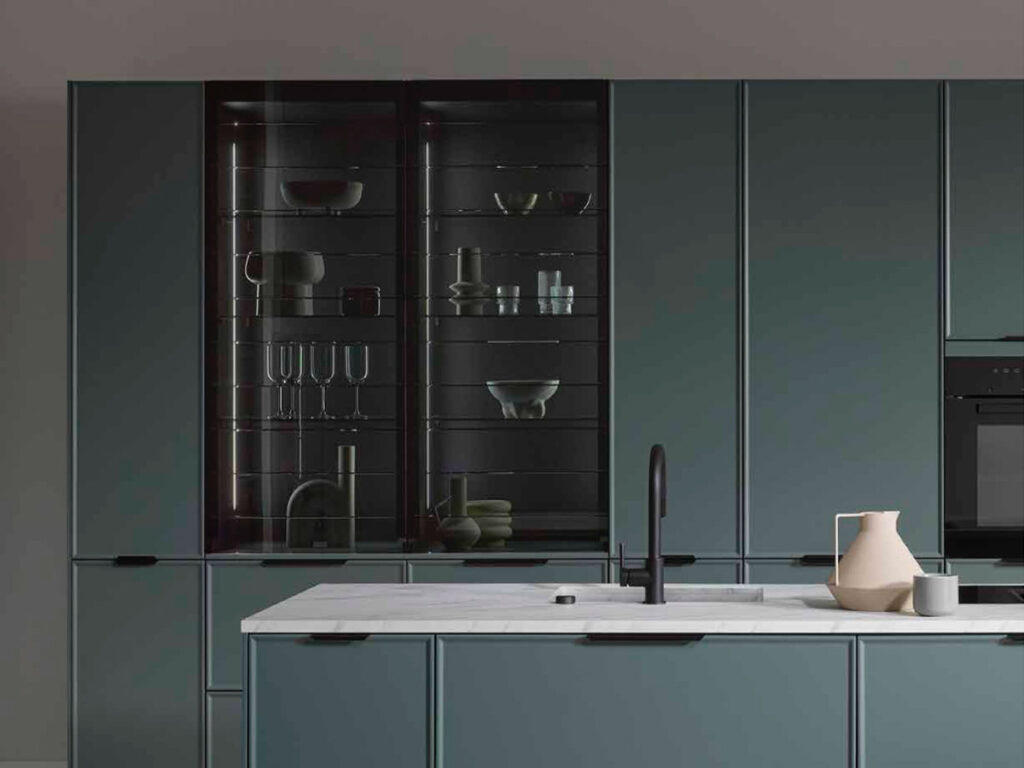
A shaker kitchen is defined by its five-piece framed cabinet doors: two vertical stiles, two horizontal rails and a recessed flat centre…