
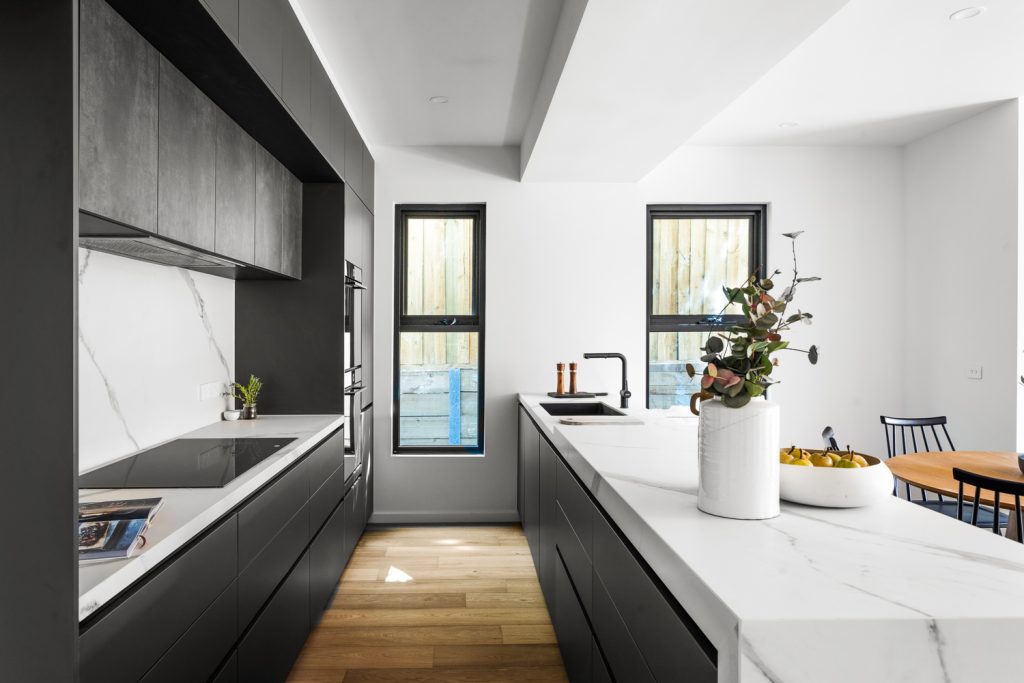
Grey Kitchen Ideas: Timeless Designs for Every Home
Grey has earned its place as one of the most enduring kitchen colours, and for good reason. Whether you lean towards soft…
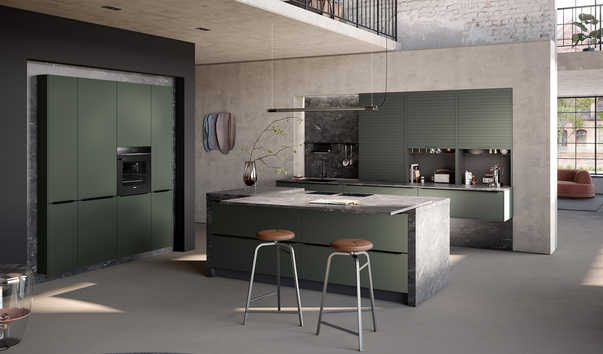
Dark green kitchens have moved well beyond trend. What started as a reaction to years of all-white interiors has settled into something more enduring: a colour with genuine depth, warmth, and architectural presence. Whether you’re drawn to a rich forest green, a moody bottle green, or the inky depth of deep hunter, here’s how to make it work in your home.
Green is the colour we most associate with nature, and that connection is a large part of its appeal in the home. In a kitchen, especially, deep green reads as grounded and calm without feeling cold. It absorbs light in a way that adds texture and dimension to cabinetry, and it pairs naturally with almost every material a kitchen calls for: timber, stone, brass, and concrete.
Unlike bolder colour choices that can feel date-specific, deep green has historical roots in Georgian and early Colonial interiors, which gives it a sense of permanence. It’s bold without being trend-led.
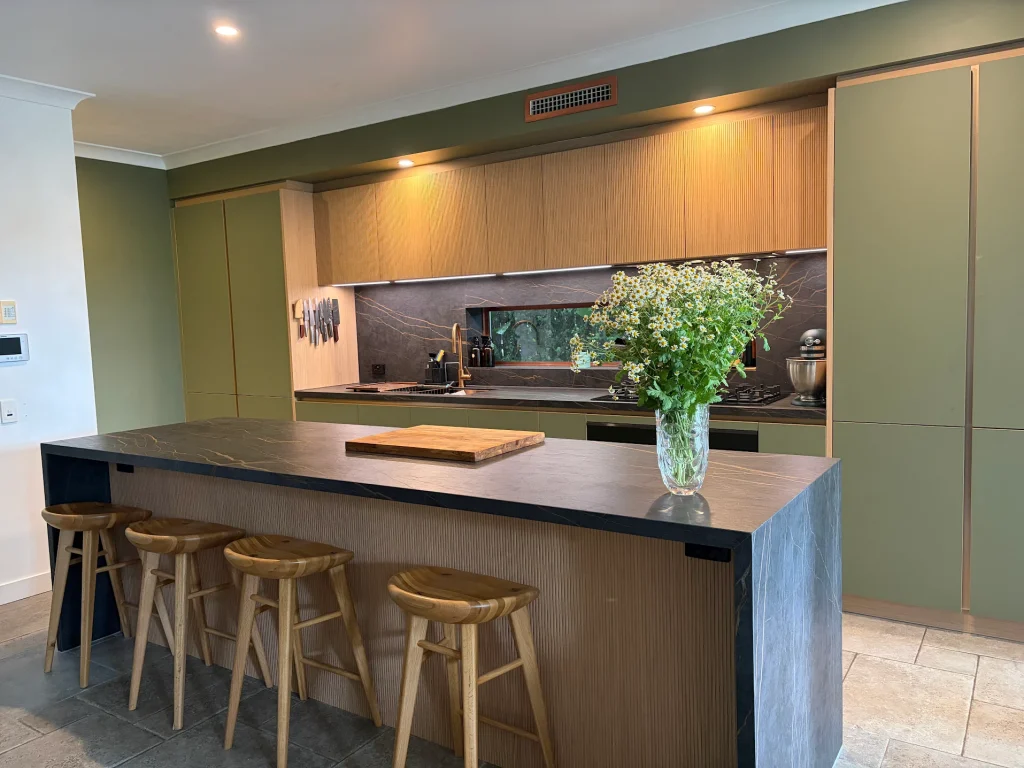
Not all dark greens are the same, and the shade you choose sets the entire mood of the kitchen.
Forest green is the most classic of the deep greens. Rich and earthy, it works particularly well with natural timber benchtops and brass hardware. It reads as warm despite its depth.
Hunter green sits slightly cooler, with blue-grey undertones that give it a more refined, almost tailored quality. It’s one of the most versatile shades for cabinetry.
Bottle green is deeper still, approaching a near-black at certain times of day. It works best in kitchens with good natural light, where the colour reveals itself fully rather than reading as simply dark.
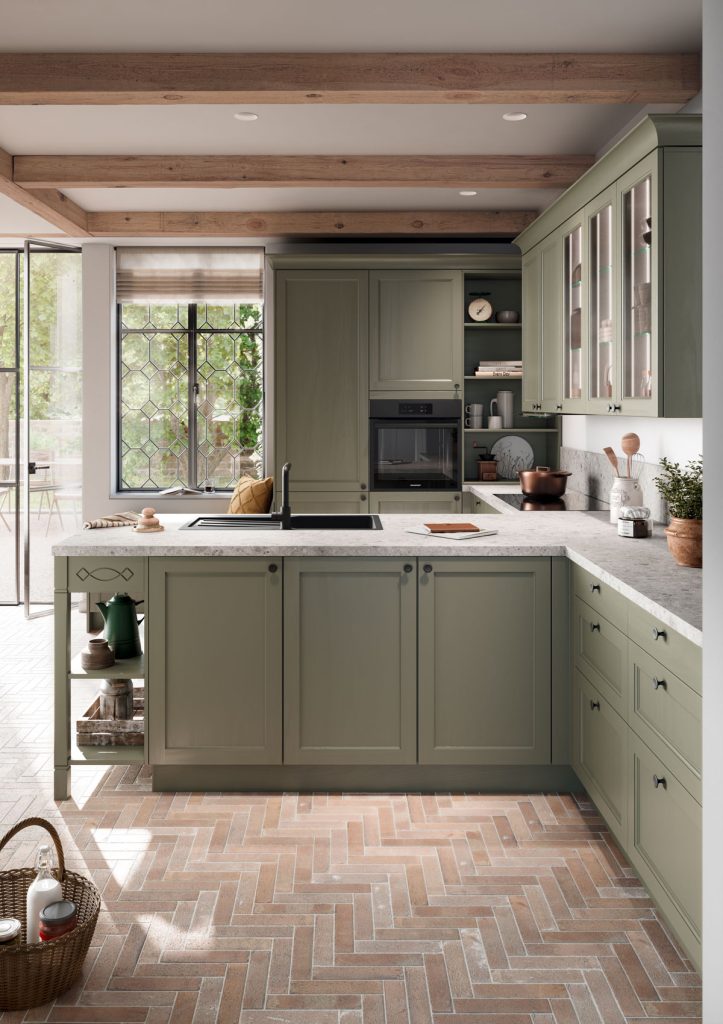
Sage and olive sit at the lighter end of the green spectrum. These warmer, muted tones are less dramatic than deep hunter but still carry strong design intent. They’re a good choice for those who want green in a kitchen without full commitment to a moody palette.
When sampling colours, view them at different times of day. Dark greens are particularly sensitive to light; the same shade can look entirely different under morning sun versus evening artificial light.
One of the most effective approaches is to use dark green on lower cabinetry and go lighter on the upper cabinets or walls. This grounds the kitchen and adds drama without overwhelming the space. Open shelving in timber or white above the bench line keeps the room feeling airy.
For those willing to commit, a fully dark green kitchen, cabinetry, walls, and even ceiling in closely related tones, creates an immersive, jewel-box effect. The key is variation in texture: matte lacquer doors, a veined stone benchtop, a gloss tile splashback. Without textural contrast, the result can feel flat.
A dark green island paired with white or neutral perimeter cabinetry is one of the most popular expressions of this trend. It gives you the drama and depth of a bold green without the full commitment, and it creates natural visual hierarchy in an open-plan kitchen.
More considered than it sounds, a monochromatic green palette works by varying the shade and finish rather than introducing contrast colours. Forest green cabinetry against a sage green wall, for example, creates a layered, tone-on-tone effect that feels both sophisticated and cohesive.
Brass and aged gold hardware are the natural partners for dark green. The warmth of the metal plays off the coolness in hunter and bottle greens beautifully, and the combination has a timeless, considered quality.
Matte black hardware delivers a sharper, more contemporary result. It strengthens the contrast and gives the kitchen a more minimal, architectural edge.
Marble and veined stone benchtops work exceptionally well alongside deep green. White Calacatta marble with grey veining is a classic pairing; the veining draws from both the white cabinetry and the green elements if you’re running a two-tone scheme.
Soapstone and dark stone create a richer, moodier effect. Deep countertops against deep green cabinetry work when balanced with lighter walls and good lighting.
Warm timber softens the palette and stops dark green from reading as cold. Timber floors, open shelves, or a timber island bring natural warmth that anchors the space.
Lighting requires extra attention in a dark kitchen. Without it, the space can close in.
Natural light is your best asset. If your kitchen has good windows, a deep green will be more forgiving. For kitchens with limited natural light, choose lighter countertops and walls to compensate.
Under-cabinet lighting is essential, both functionally and aesthetically. It separates the benchtop from the cabinetry, creates warmth in the lower half of the kitchen, and ensures the dark green reads as intentional rather than dim.
Pendant lights over an island are a strong design choice in a dark green kitchen. Warm brass or aged metal pendants continue the material story; white or ceramic pendants offer contrast.
Warm colour temperature bulbs (2700-3000K) work best here. Cool white lighting fights against the warmth of green and can make the space feel clinical.
The handleless kitchen design, a hallmark of Häcker Australia’s German cabinetry engineering, takes on a different character in dark green. Without hardware to interrupt the surface, the colour reads as one continuous, architectural plane. The depth of a deep forest or hunter green is heightened when the door fronts are clean and uninterrupted.
Häcker’s handleless range is engineered with this precision in mind. In dark green matte lacquer, the result is a kitchen that feels simultaneously bold and restrained.
Going too dark without enough light. Deep green absorbs light. If your kitchen doesn’t have good natural or artificial light, the space will feel smaller than it is.
Ignoring the undertone. A green with strong blue undertones can clash with warm timber or brass. Identify whether your green leans warm (olive, moss) or cool (hunter, teal) before committing to materials.
Overloading on contrast. Dark green is already a strong design statement. Keep surrounding elements considered and restrained. Not every surface needs to compete.
Dark green is one of the most rewarding colour choices you can make in a kitchen renovation, but it requires confidence and considered execution. The finish, the hardware, the lighting, and the surrounding materials all work together to either elevate or undermine the palette.
The Häcker Australia showrooms in Melbourne, Brisbane, and Perth are the ideal place to explore cabinetry finishes in person, see how materials interact under real lighting conditions, and work through your design brief with an expert. Book a consultation and bring your inspiration.

Grey has earned its place as one of the most enduring kitchen colours, and for good reason. Whether you lean towards soft…
A decade ago, a butler’s pantry was considered a luxury reserved for architect-designed homes. Today, it has become one of the most…
For years, white and grey dominated kitchen design. Now, a warmer, richer alternative has taken hold: the walnut kitchen. With its deep…